Skip to content
SunGeneAgricultural IoT
← Agricultural solutions

Fields, orchards & growing zones

Soil & Weather Monitoring Equipment for Farms

Compare soil probes, weather instruments and leaf-wetness sensing for fields and orchards. Match measurement points, logger inputs and field connections.

Discuss Your Project

Build the measurement points around the field

Root-zone readings, local weather and leaf wetness describe different parts of the growing environment. Choose the measurements for your crop zones, then match their outputs to the logger.

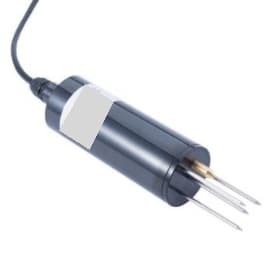
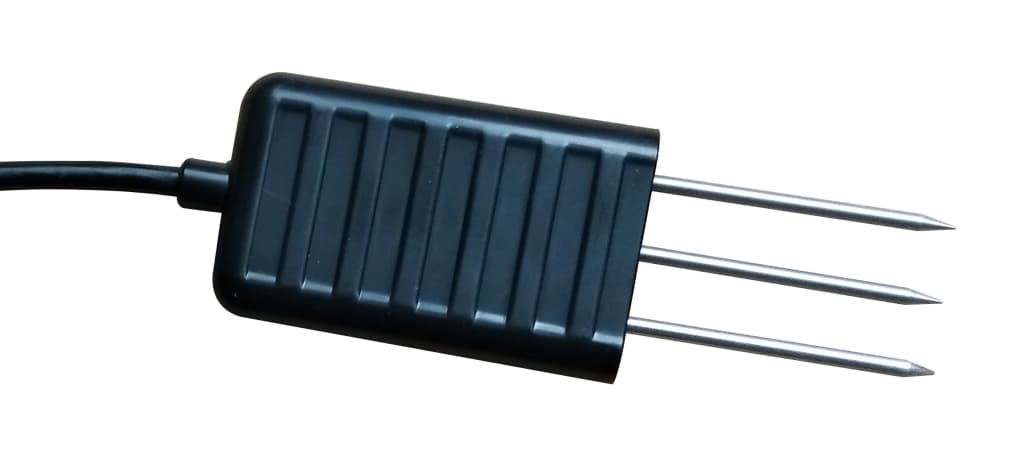
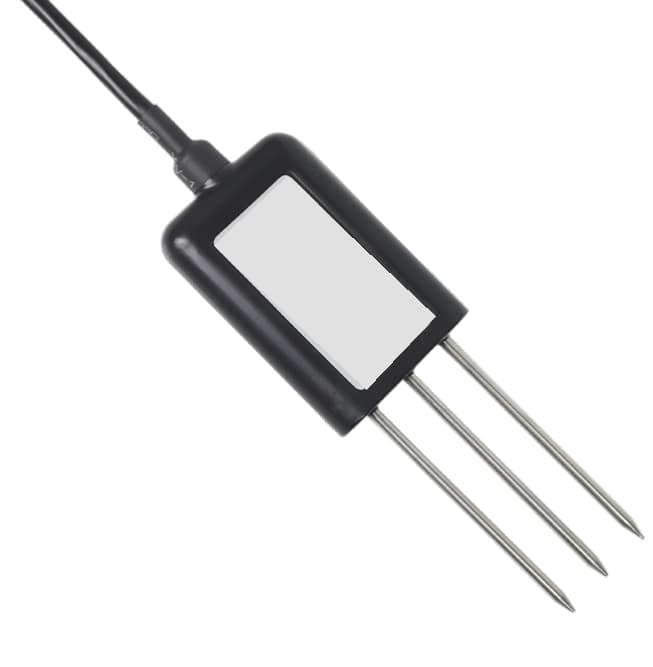
SG-SOIL-121: Soil Moisture, Temperature and EC Sensor
Pictured: SG-SOIL-121 — Soil Moisture, Temperature and EC Sensor.

Compare soil moisture at different depths

Follow moisture trends through an irrigation cycle at representative points in a field or orchard.

Equipment to select

Three-rod soil probes with the selected moisture range, EC range and RS485 Modbus RTU, SDI-12 or 0–2 V output.

Use a logger input that matches the ordered output. Soil type, probe contact and sensing depth affect the comparison.
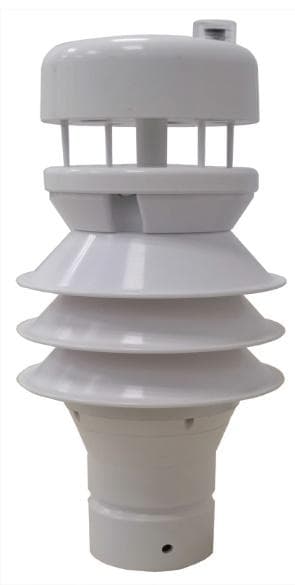
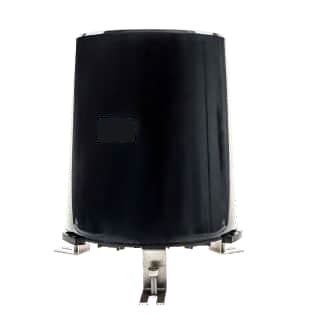
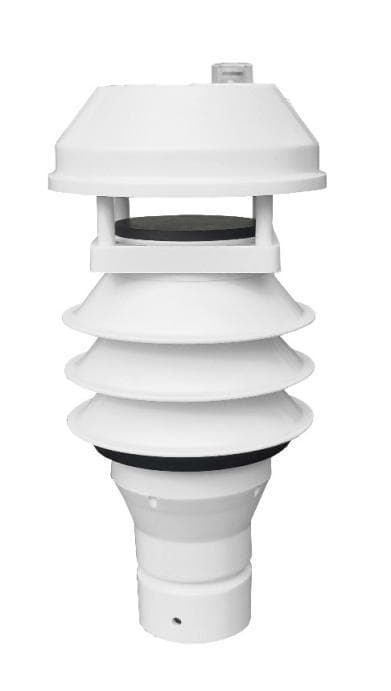
SG-WS-163: Ultrasonic Automatic Weather Station
Pictured: SG-WS-163 — Ultrasonic Automatic Weather Station.

Record weather beside the crop area

Compare irrigation and field work with rainfall, wind and air conditions measured at the farm.

Equipment to select

Selected weather instruments, logger inputs, mounting and the site power supply.

Rainfall and radiation use the selected channels or separate instruments. Choose the position for each measurement.

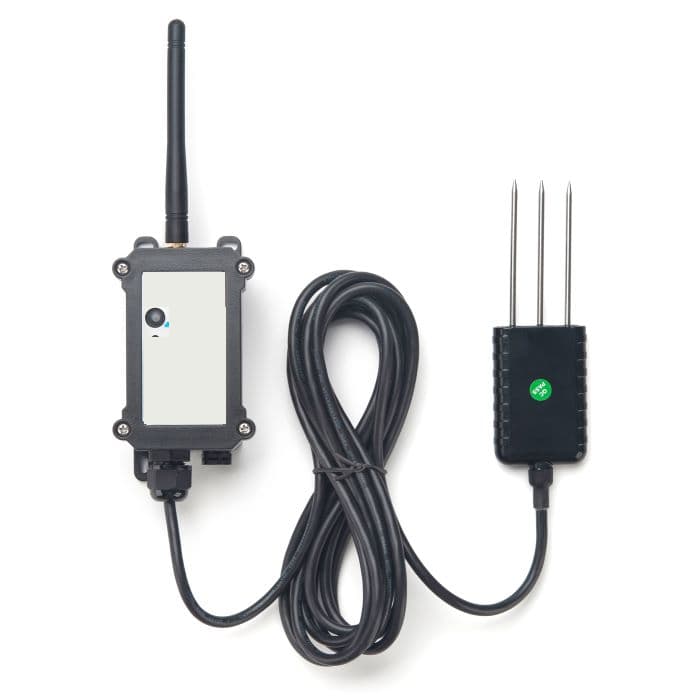
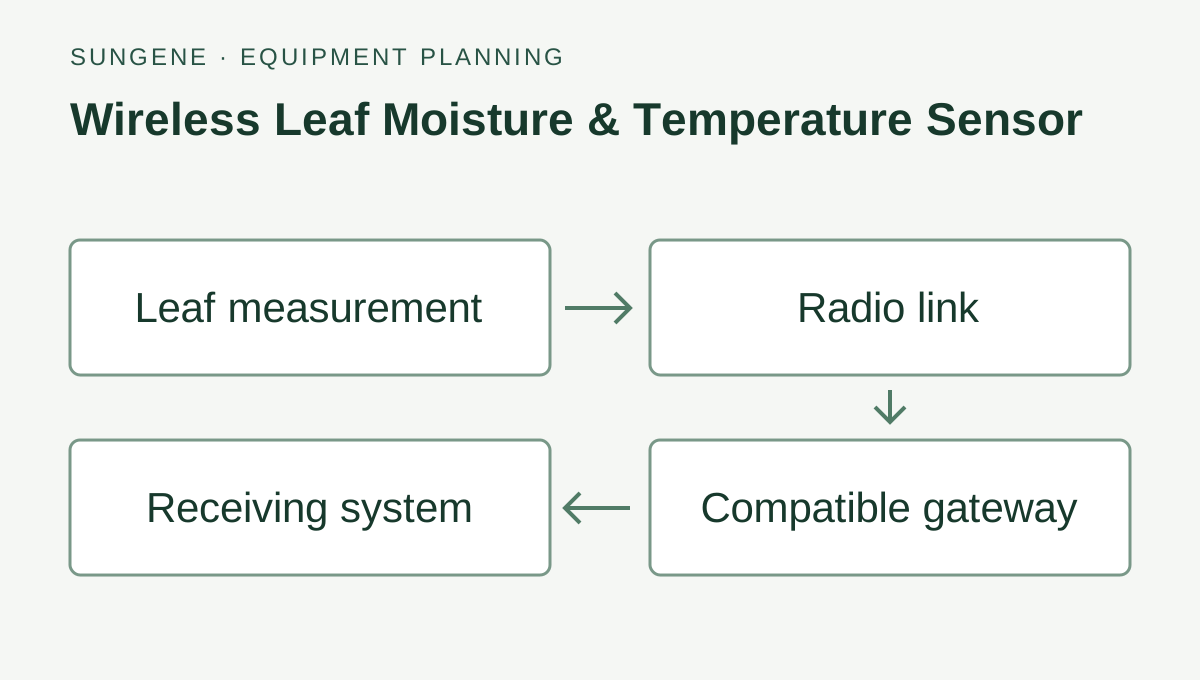
Wireless Leaf Moisture & Temperature Sensor: Leaf measurement → Radio link → Compatible gateway → Receiving system.
Wireless Leaf Moisture & Temperature Sensor — connection diagram.

Record wetness near the canopy

Follow leaf-wetness and temperature trends alongside the weather and irrigation record.

Equipment to select

Wireless leaf-wetness and temperature sensor with the selected LoRaWAN or cellular connection and canopy mounting.

Place the sensing surface for the crop and exposure. Crop specialists interpret the readings for disease-management decisions.

Start with a field map and the measurement points

  • Country, crop, soil type and growing zones
  • Depths, required readings and approximate point count
  • Cable routes, existing logger, power and network conditions

Compare soil EC under defined soil and moisture conditions. The probe reading is an in-situ measurement; laboratory soil-salinity analysis uses its own method.

Root-zone, light and weather measurements

RS485 equipment for farms and greenhouses

Compare soil moisture and pH, crop light, weather instruments and greenhouse relay panels. Open a family to see its measurement ranges, configuration choices and connection requirements.

The field requirement

Measurements and equipment on site

Understand root-zone moisture, temperature, rainfall and local climate without treating every measurement point as a separate project.

Who handles each part?

SunGene handles equipment sourcing, farm system architecture and the agreed software or integration work. On-site construction and installation are carried out by local teams; we can help you find and coordinate a suitable partner.

System architecture & engineering details
  1. 01Field sensingSoil, weather, water & equipment
  2. 02Data acquisitionInputs, mapping & field power
  3. 03ConnectivityWired, wireless & recovery
  4. 04Platform integrationYour platform or a suitable service
  5. 05Alerts & decisionsAgreed views, exports & workflows
Equipment and functions are selected for each project. Control work also requires agreed command authority, local protection and outage behaviour.

Selected soil and weather sensors → field logger with the required inputs → suitable wired or wireless uplink → your platform or an agreed data service → trends, exports and defined alerts.

Connect soil and weather measurements to the right collector

Choose a path for the measurement points and equipment you have. Sensor versions, logger inputs, power and the receiving platform are checked together before ordering.

Sensor → collector → receiving platform
Measurement and signalCollector and connectionReceiving platform

Soil measurements in a growing zone

Confirm soil or substrate, representative locations and installation depth for moisture, temperature or EC readings.

Soil sensor family

Placement guide

Match the selected sensor output to the logger inputs. Check sensor excitation, sample interval and the complete station power load.

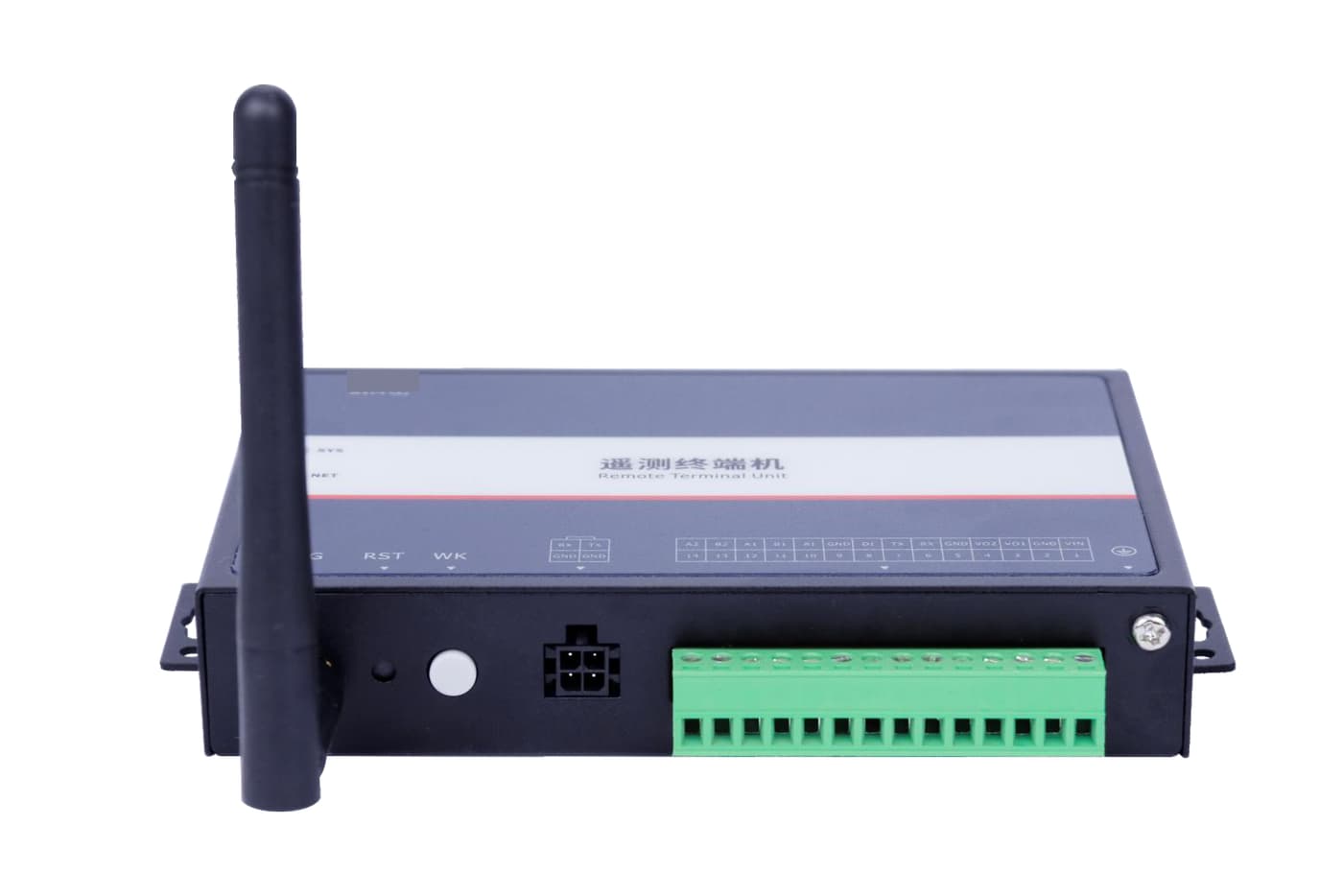
4G RTU selection

Solar field power

Keep sensor location and depth with each data stream. Map units and timestamps to the farm platform; agronomic thresholds are agreed with the grower.

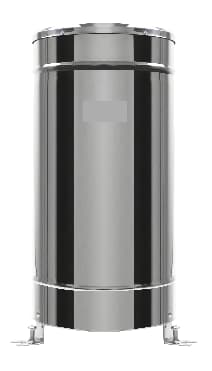
Connect an existing weather station or rain gauge

Identify the installed outputs and the measurements to retain, including rain totals and their recording period.

Weather station options

Rain-gauge selection

Select a logger or RTU that supports the documented interface. Confirm pulse counting or register support for the actual instrument.

4G RTU

Gateway / RTU kit

Agree time zone, rain-total period and API fields. Check which records remain available after network or power loss.

Distributed soil or weather points using LoRaWAN

Select native LoRaWAN instruments or compatible field nodes for wired sensors; a wired probe alone cannot join LoRaWAN.

RS485 field-node path

Check the regional radio plan, field-node inputs, sensor power, gateway coverage and its network connection.

Outdoor LoRaWAN gateway

Gateway and sensor kit

Network server → decoder → farm application. Verify sensor identity, field location, units and original timestamps after decoding.

Start with your country and what you want to measure. A model label or site photo helps if available; point counts, power and platform details can follow.

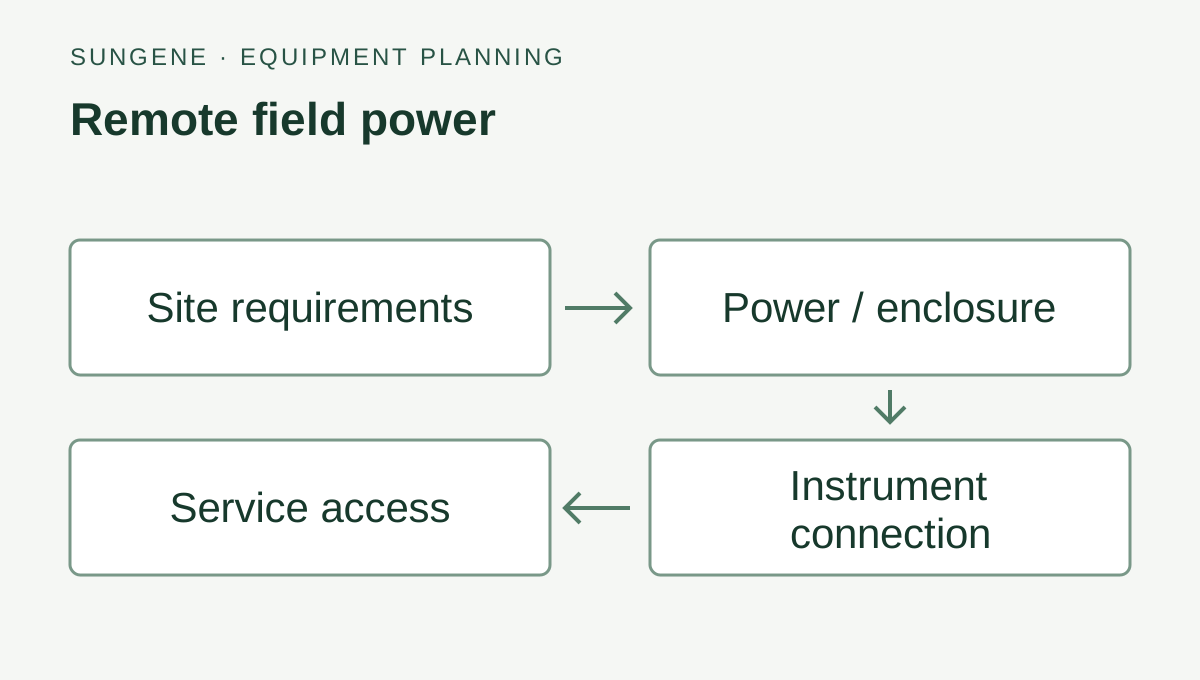
Size power for a remote soil or weather station

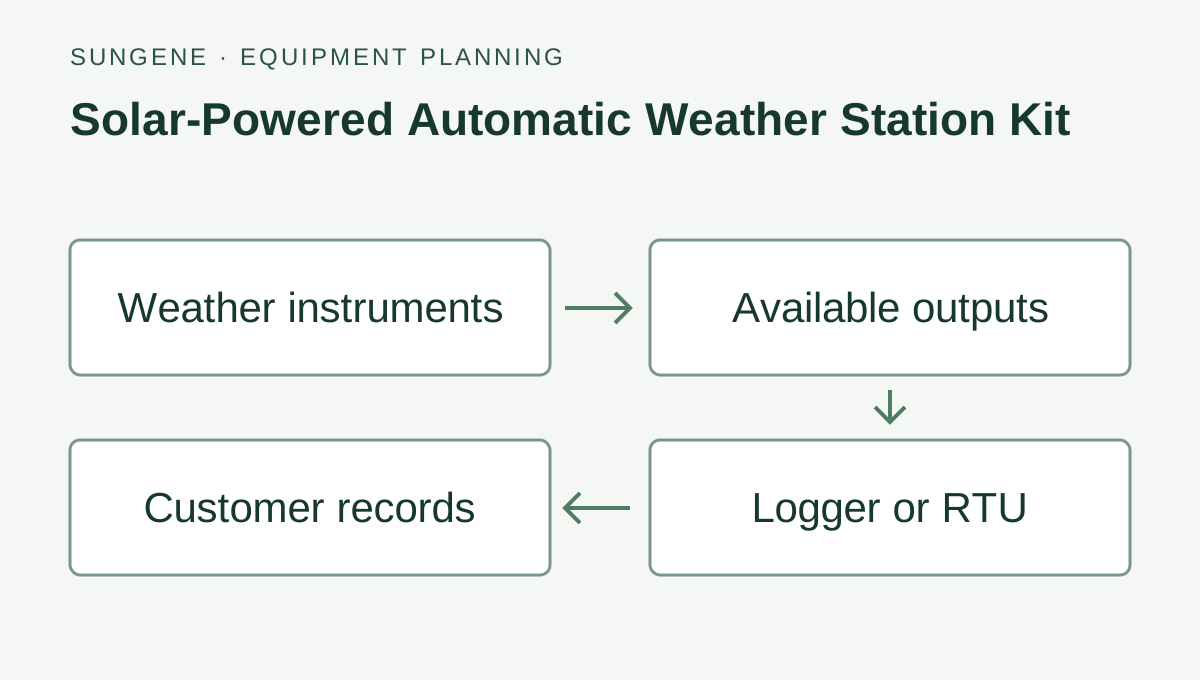
Solar-Powered Automatic Weather Station Kit: Weather instruments → Available outputs → Logger or RTU → Customer records.

Soil & Weather Monitoring for Farms

Plan readings beside the crop and in the root zone. Choose the weather channels, soil measurements and way your team will collect the records.

Site & interface review

Check power, interfaces and installation conditions

  • Soil or substrate, installation depths and representative locations
  • Sensor methods, calibration needs and seasonal servicing
  • Status inputs, power budget and the actual logger configuration
  • Coverage, measurement timestamps and platform field mapping

Working with what is already there

Review existing equipment for reuse.

Existing probes or weather equipment can be reviewed for reuse when their model, output and documentation are available. Compatibility is confirmed against the required logger and data interface.

Review equipment compatibility

Equipment selection questions

How many soil measurement points does a farm need?

Choose representative points for different soil types, crop zones and sensing depths. Compare a first group of readings with the crop team before extending the installation.

Can a weather station read the soil probes directly?

The receiving logger must support the output ordered with each probe. Soil-probe options include RS485 Modbus RTU, SDI-12 and 0–2 V; weather channels use their corresponding inputs.

What information is needed for a soil and weather equipment quotation?

Send the country, crop and soil type, measurement points and depths, required weather readings, and available power and network. Include the existing logger model if one is installed.

See where the system fits

Our project role

Equipment, data connections and operating documents

01

Requirements and measurement-point list

02

Equipment comparison, input mapping and power review

03

Data mapping and agreed platform connection

04

Pilot results, configuration records and deployment handover

Your proposal lists the selected equipment, software functions, checks, site responsibilities and support. Share your existing equipment and site conditions so we can define the configuration.

See our integration services

Useful before you begin

Related installation and selection guides

Related equipment families

Equipment for this system

Select the version for your controller, power and site.

Contact SunGene

Ask about equipment,
planning or a system fault.

Tell us your country and what you want to measure or fix. A site photo or equipment list helps us check the options.