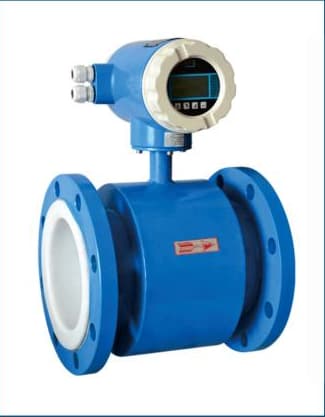
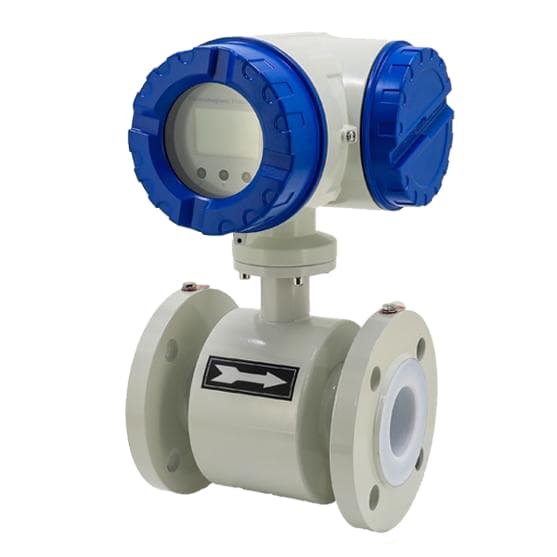
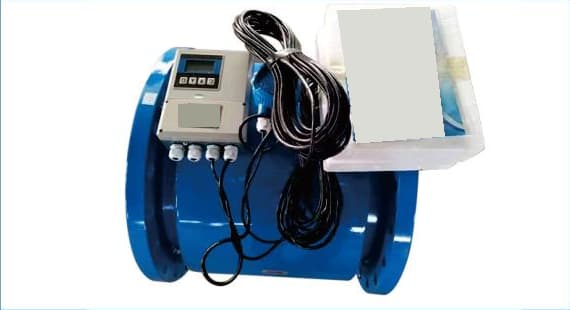
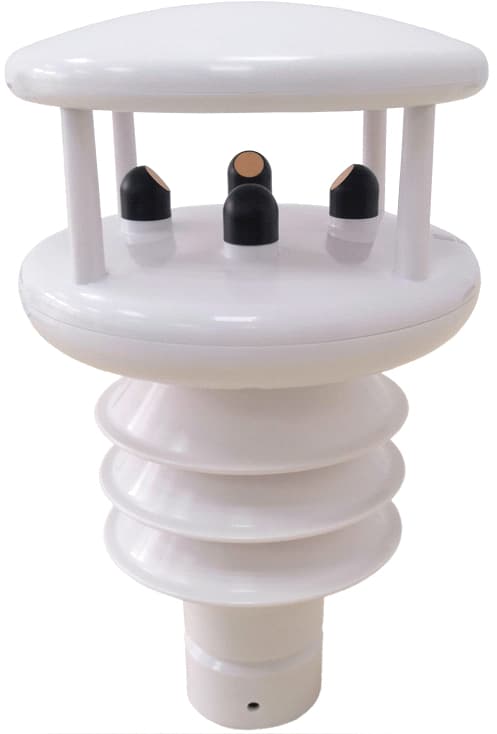
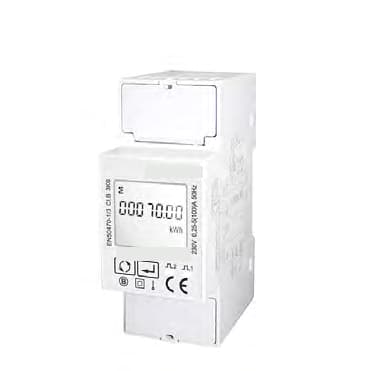
Pictured: SG-EMF-102 — Electromagnetic Flow Meter, Integrated and Remote.
Electromagnetic Flow Meter
Equipment options & specifications
Bidirectional electromagnetic flow meter for conductive liquids, with selectable ±0.5% or ±0.2% accuracy and order-code options for 4-20 mA, pulse, RS485 Modbus, power and liner.
Use an electromagnetic meter on a full pipe carrying electrically conductive water. Select the diameter from normal and peak flow, then match the liner, electrodes, flange and output.
Clamp-on measurement illustration; probe spacing follows the selected instrument.
Check several pipes during a site visit
A portable clamp-on ultrasonic kit uses transducers outside the pipe. Record the outside diameter, wall thickness, material, liquid and mounting position for each water point.
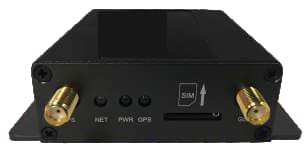
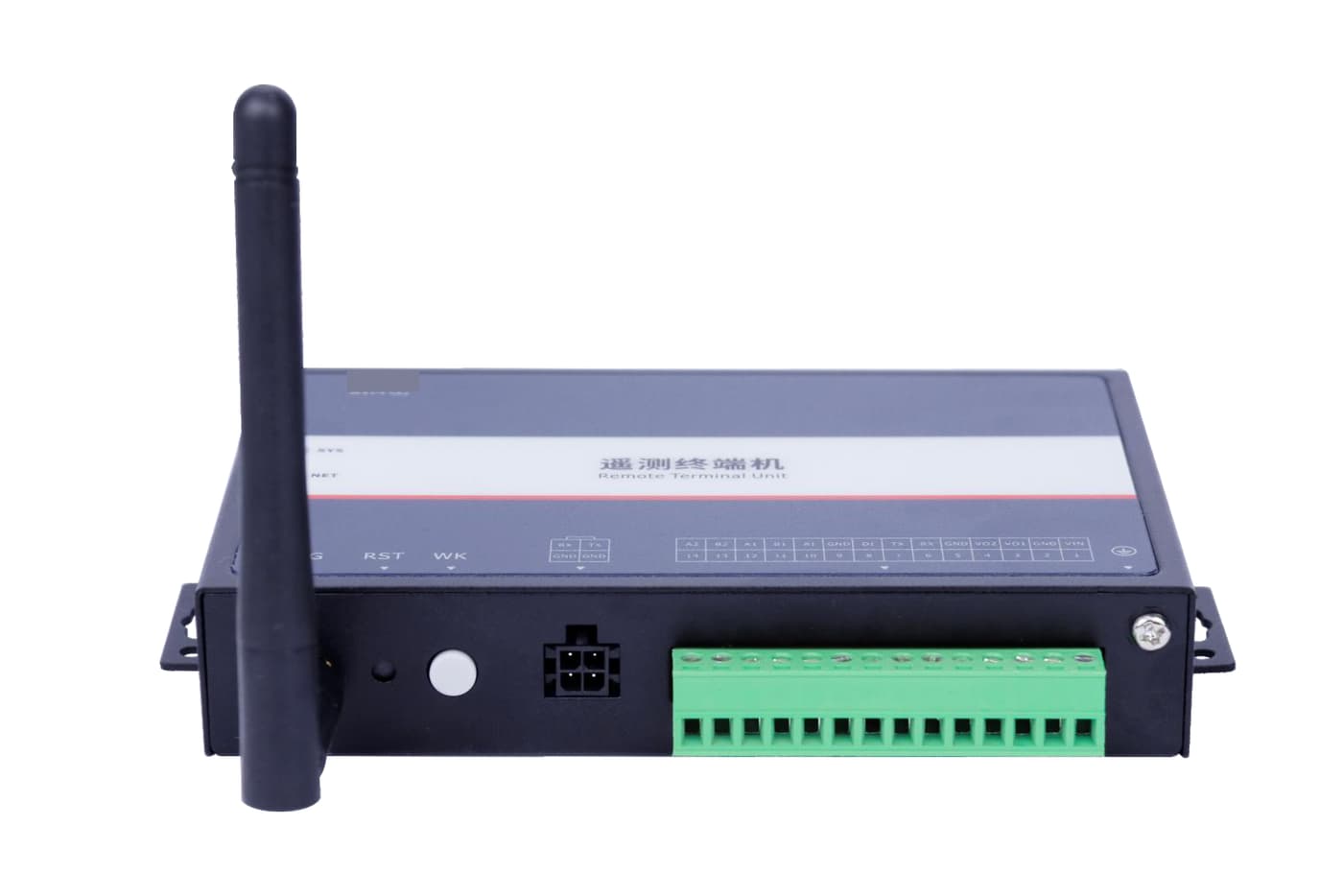
Pictured: SG-RTU-152 — Industrial Telemetry Remote Terminal Unit.
Bring an installed meter into the farm record
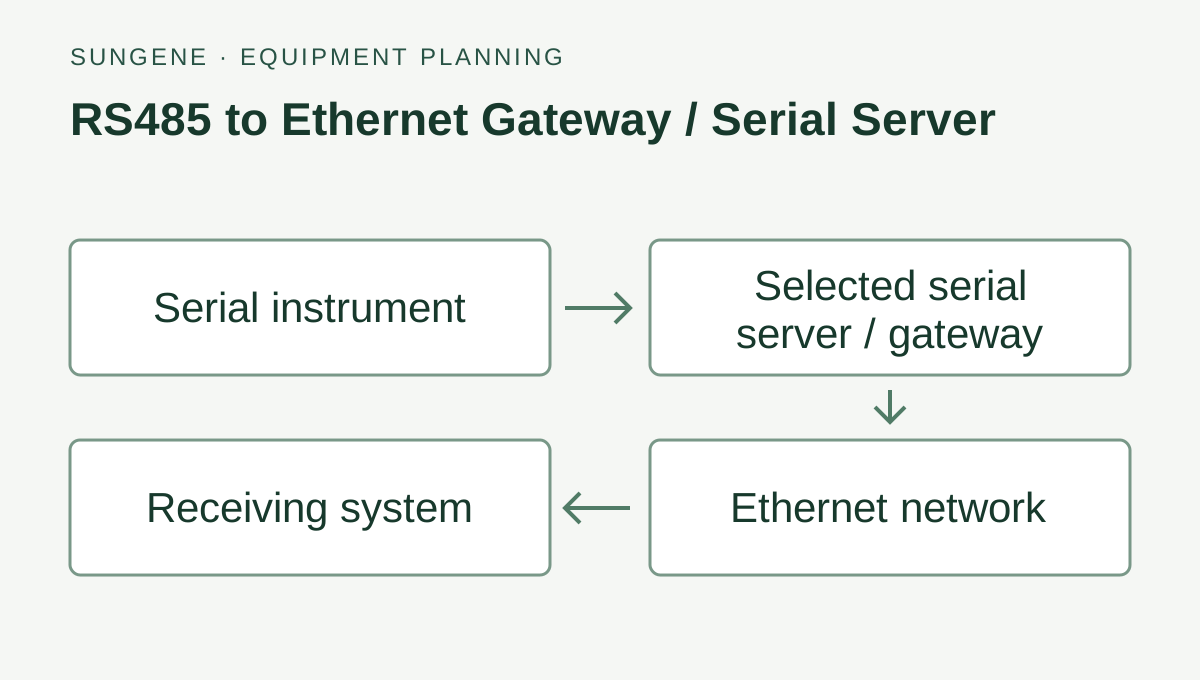
Keep the meter and read its documented pulse, 4–20 mA or serial output through a compatible logger or RTU. Match the units, scaling and totaliser records to the receiving system.
Record flow at the supply line to see when water is delivered and how use changes. Pipe size, a full pipe and installation conditions matter when choosing a meter.
Select a meter for irrigation water
Farm water-monitoring teams can monitor suitable conductive liquids. Select wetted materials for the actual liquid and use a billing-approved meter where payment depends on the reading.
Specifications & version options
Measurement
Electromagnetic, bidirectional; conductive liquids only
Enter normal and peak flow, then the internal pipe diameter. Add a run time to calculate water volume at the normal rate. Add the watered area to compare the run as an average water depth.
Use the internal bore from the pipe or meter drawing.
Use the area served by this line during the run.
Flow and speed in the water line
Enter the flow rates and internal diameter to see the result.
The calculation uses a full, circular pipe and constant normal flow for the run volume. Select the meter using the water, flow range, bore, liner, electrodes, connection and installation.
Cross-sectional area = π × internal diameter² ÷ 4. Speed = flow ÷ area. Run volume = normal flow × time.
Depth and application rate are averages over the entered area. Water losses and uneven distribution are not included.
Average depth (mm) = water volume (m³) × 1,000 ÷ area (m²). One millimetre over one hectare equals 10 m³.
Customer platform or an agreed third-party service
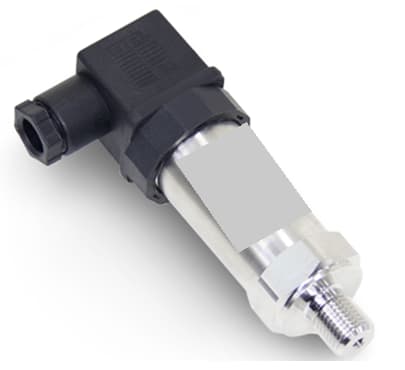
Product photograph
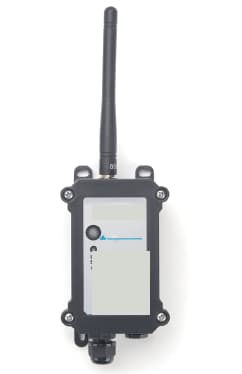
Pictured: SG-RTU-145 — Water Level Telemetry Terminal.
Select the flow tube around the liquid, velocity and installation
Meter specifications vary by order code. Confirm the range, materials, connections and output for the selected configuration.
The liquid must be electrically conductive. Do not use this electromagnetic meter for oil, gas, pure water or deionised water without a separate suitability review.
Select diameter from the normal flow rate as well as the existing pipe. The velocity range is 0.3-10 m/s; the standard flow table is based on 0.3-6 m/s, while 10 m/s requires a customised selection.
Match the liner and electrode to the liquid and temperature. Rubber is specified for -20 to +60 °C, PTFE for -20 to +120 °C, and PFA or ceramic for -20 to +180 °C.
Show 3 more selection notes
Choose ±0.5% or ±0.2% of-reading accuracy according to the application. Repeatability is ±0.1%.
Compact local-display and remote structures are available. IP68 applies only to the remote structure; do not specify IP68 for the compact meter.
Output, communication, power, flange, body and grounding choices are separate order-code fields and are confirmed together in the quotation.
Size the meter from the normal and peak flow as well as pipe DN. The velocity range is 0.3-10 m/s, while the standard flow table is based on 0.3-6 m/s.
Confirm that the liquid is electrically conductive. Oil, gas, pure water and deionised water require another measurement principle or a separate suitability review.
Choose rubber, PTFE, PFA or ceramic lining and the electrode material from the liquid chemistry and operating temperature.
Select compact or remote structure, DIN / ANSI / JIS flange, body material, grounding and pressure class as separate order-code fields.
Show 1 more selection check
Share the PLC, RTU or gateway input so 4-20 mA, pulse, Modbus RS485, HART or the project-specific communication option can be fixed in the quotation.
Compatible with
Full-pipe water, wastewater and other conductive-liquid applications after fluid compatibility is reviewed
PLC, RTU or data-acquisition inputs using the selected 4-20 mA, pulse or RS485 Modbus output
DIN, ANSI or JIS flanged pipelines when the ordered diameter and pressure class are confirmed
Remote telemetry through a separate 4G, Ethernet, NB-IoT or LoRaWAN RTU / gateway
Typical package
Electromagnetic flow meter with the selected diameter, liner, electrode and body material
Selected compact local-display or remote-converter arrangement
Selected signal output, communication interface and power configuration
Project-specific grounding ring or grounding-electrode arrangement when required
Upstream PLC, RTU or gateway plus cable, surge protection and enclosure accessories
Applications
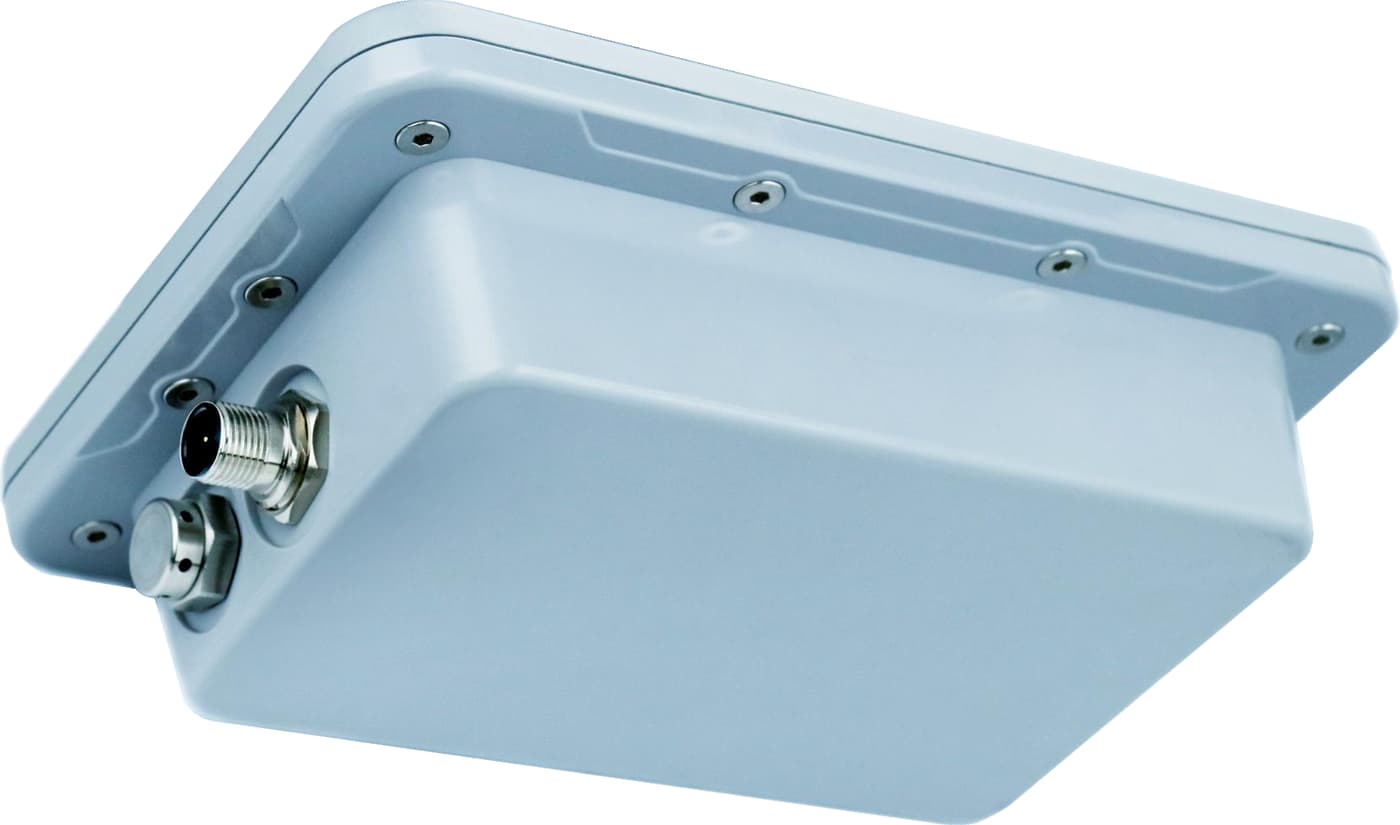
Product photograph. Pictured: SG-RLT-108 — Non-contact radar water level sensor.
Use this meter for bidirectional flow measurement when the pipe remains full and the liquid is electrically conductive. Selection starts with normal and peak flow, pipe diameter and flange standard, then confirms liner, electrode, body material, accuracy, output, communication, power and compact or remote structure. Oils, gases and liquids with insufficient conductivity require a different measurement principle.
Farm water-supply and treatment pipelines
Irrigation, raw-water transfer and pump-station flow monitoring
Conductive process-liquid measurement after liner and electrode compatibility is checked
PLC, SCADA and remote-telemetry projects using 4-20 mA, pulse or RS485 Modbus
Can this electromagnetic flow meter measure oil or pure water?
Not as a default selection. Electromagnetic measurement requires an electrically conductive liquid. Oil, gas, pure water and deionised water need another measurement method or a separate conductivity and application review.
Which outputs and communications can be selected?
The order-code options include 4-20 mA or pulse output, Modbus RS485, HART and a GPRS option. These are alternatives selected by order code, not interfaces that are all present in every meter.
What is the difference between the compact and remote versions?
The compact version places the converter and local display on the flow tube. The remote structure uses a separate converter with a 10 m cable option and is the only structure in this family that can be specified as IP68.
What information is needed to select the liner and electrode?
Share the liquid, conductivity, normal and maximum temperature, chemical compatibility, pipe diameter, normal and peak flow, flange standard and pressure class. The quotation then fixes the liner, electrode, body, grounding and output configuration.
Will it work with my existing system?
Use the listed inputs, power and protocol to match the device to your controller. Send its model or an input photo with the equipment request.