
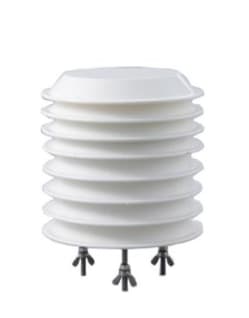
Greenhouse root-zone records
Record moisture, temperature and EC at the same soil point alongside the greenhouse air and light readings.
Soil moisture · Soil temperature · Electrical conductivity · Salinity
Four soil measurements at one point: moisture, temperature, electrical conductivity and salinity. RS485 Modbus RTU, 7–30 VDC supply and an IP68 probe.
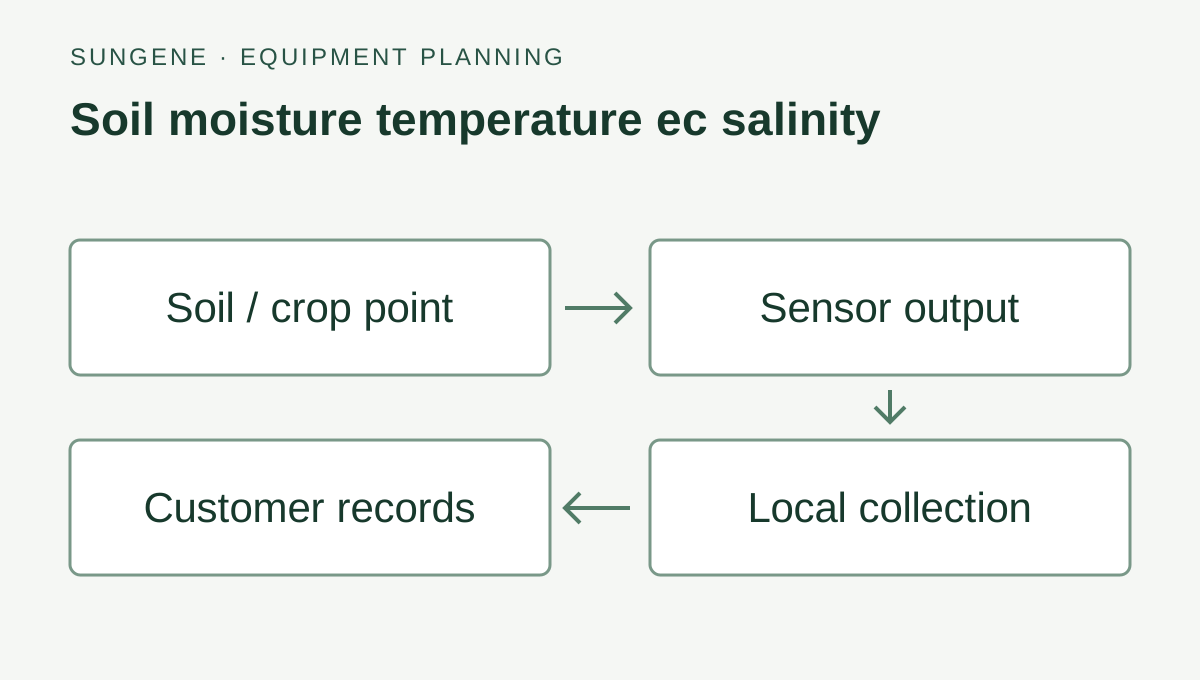
Keep moisture and conductivity readings together at each soil monitoring point. The probe measures temperature, moisture, EC and salinity through one RS485 connection. Choose the moisture output mode used by your soil records, then connect the points to a field logger or RTU.
Record moisture, temperature and EC at the same soil point alongside the greenhouse air and light readings.
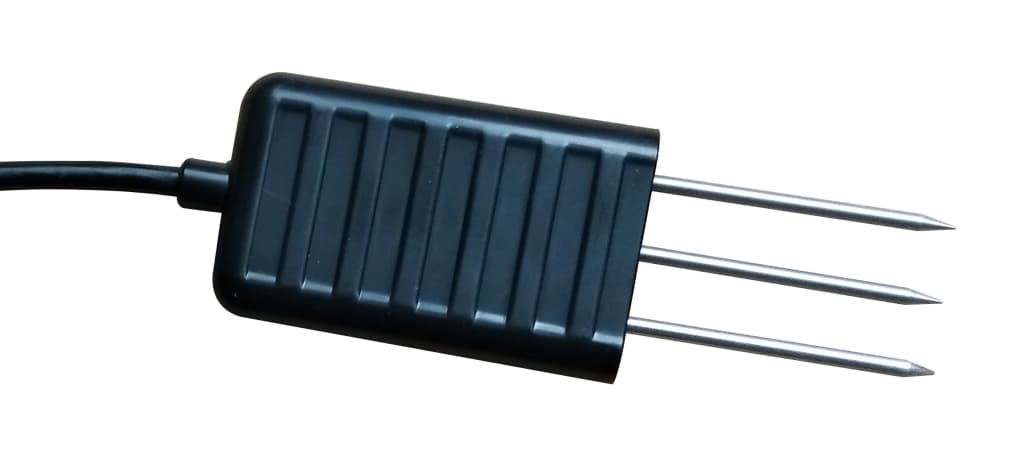
Place probes at the selected measuring depths and collect soil readings before and after irrigation.
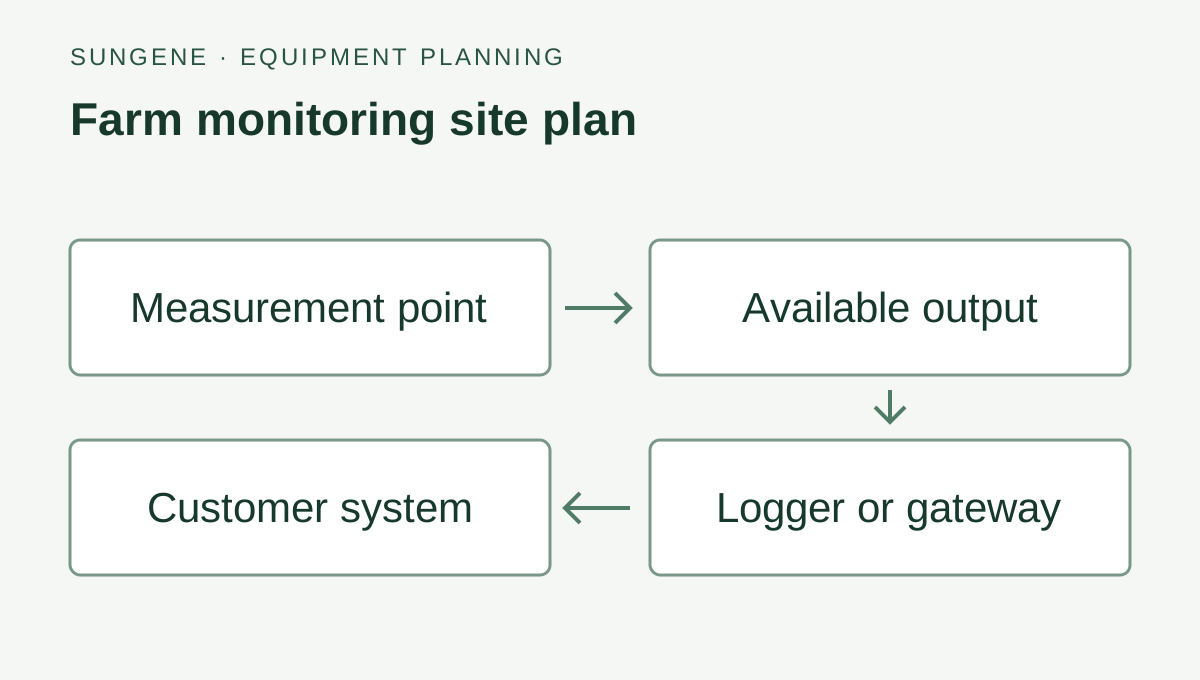
Use separate points for the growing areas or soil positions that the farm needs to track.
Include these details with your inquiry so the equipment and options match your site.
Gravimetric water content is the default. Volumetric water content is the alternative output mode.
2.5 m cable with a bare-wire or quick-connector end. Other cable lengths are part of the selected configuration.
RS485 Modbus RTU output and a 7–30 VDC supply connect the probe to a logger or RTU.
| Item | Specification |
|---|---|
| Measured variables | Temperature, moisture, electrical conductivity and salinity |
| Power supply | 7–30 VDC; 250 mW |
| Communication | RS485 Modbus RTU |
| Temperature | -40 to 80 °C; accuracy ±0.5 °C; resolution 0.1 °C |
| Volumetric water content | 0–60%; accuracy ±3% at 0–35%, ±5% at 35–60%; resolution 0.1% |
| Gravimetric water content | 0–100%; accuracy ±3% at 0–25%, ±5% at 25–100%; resolution 0.1% |
| Electrical conductivity | 0–20,000 µS/cm; accuracy ±5%; resolution 1 µS/cm |
| Salinity | 10,000 mg/L range; accuracy ±5%; resolution 1 mg/L |
| Moisture measurement method | Frequency domain reflectometry (FDR) |
| Probe material | 316 stainless steel |
| Operating temperature | -40 to 80 °C |
| Protection and weight | IP68; 200 g |
| Standard cable | 2.5 m; bare-wire or quick-connector end |
One probe measures soil temperature, moisture, electrical conductivity and salinity through RS485 Modbus RTU.
Gravimetric and volumetric water content use different output modes and ranges. Choose the mode used by your soil records; gravimetric output is the default.
Provide a 7–30 VDC supply, an RS485 Modbus RTU logger or RTU connection, and the cable arrangement for the selected soil position.
The equipment list brings together the sensing or control points, supply, wiring, data connection and installation work.