Can a logger’s sleep-current figure predict the battery life of a complete monitoring station?
Use the complete operating cycle. Include sensor power and warm-up, measurement, storage, cellular connection and upload, retries, idle periods and conversion losses. Check the selected configuration at its intended sampling schedule, then size the usable battery energy and charging system for the site.
Plan an outdoor measurement station- Wake sensor
Warm up and reach a valid reading
- Measure + store
Read channels and save the sample
- Connect + upload
Include attach, transmit and retry time
- Sleep
Return to the intended idle state
Write down a normal day at the station
A battery-powered logger wakes, powers a probe, waits for a stable measurement, records it and uploads through a cellular modem. Some stations upload every sample; others take several samples before connecting. A very small sleep current can be attractive, but the station may spend a substantial part of the day outside sleep. Begin with a timeline of what each device does, rather than a battery-life number borrowed from another configuration.
Check which devices really switch off
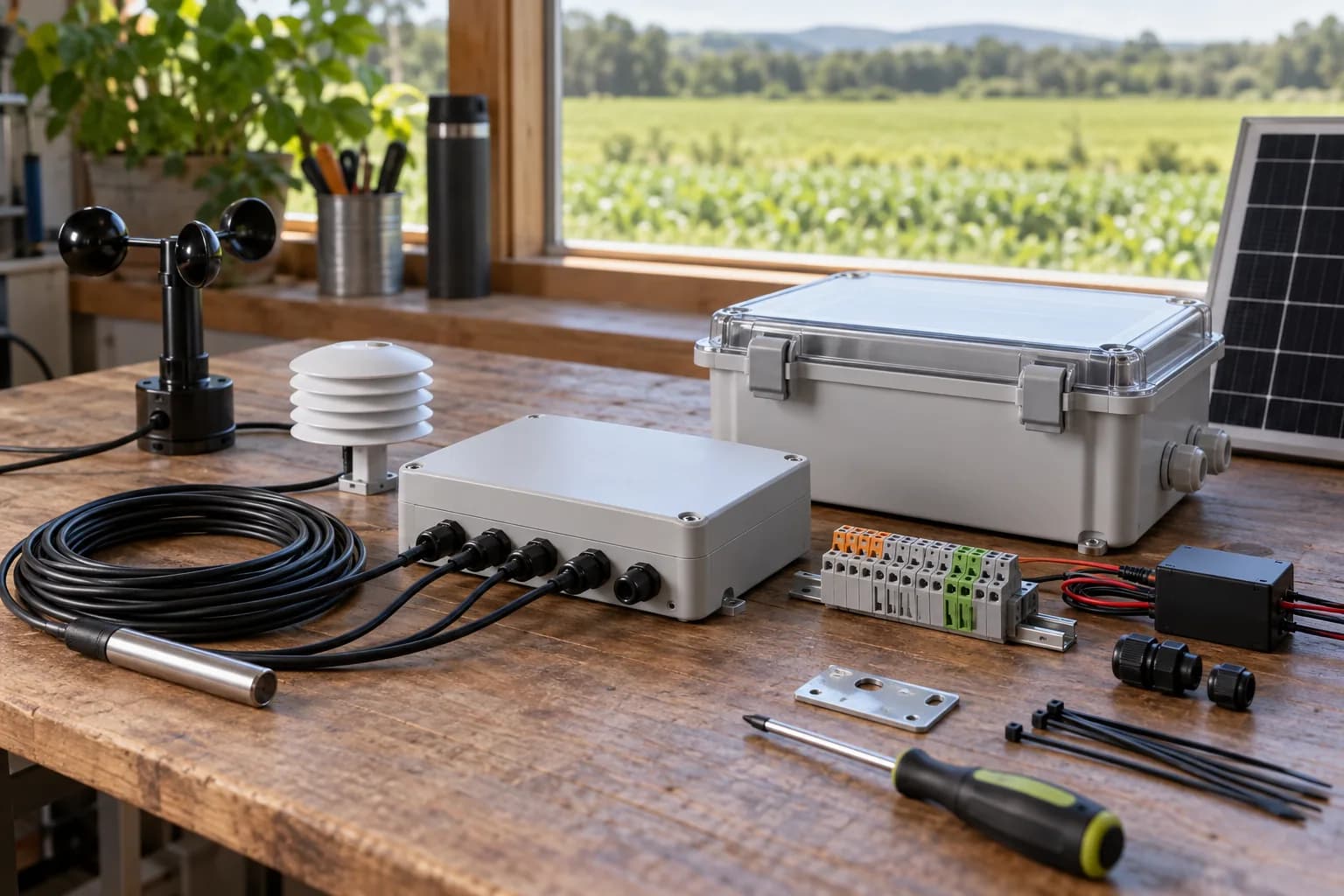
List the logger, probes, modem, converters and any display or cleaning mechanism. For each one, identify whether it remains powered, enters a low-power mode or is switched off. Confirm that the logger can switch the required sensor load and that a switched probe resumes correctly. A continuous current-loop transmitter and a short-duration digital measurement need different power plans. Reducing the logger’s own consumption will have limited effect when an attached instrument stays on.
Use energy for the cycle, not one current reading
For an illustrative calculation, a 2 W load active for one minute uses about 0.033 Wh. At one cycle every 15 minutes, 96 such cycles use about 3.2 Wh per day. This example leaves out sleep consumption, other equipment and losses; add those separately. If the active time doubles, that part of the energy requirement doubles. Keep voltage with each current measurement so readings from different supply rails can be converted into watts and watt-hours.
Include a difficult network day
Weak coverage can change how long the modem takes to attach and send data. An unavailable server can also trigger repeated attempts. Agree a retry schedule that fits the data requirement and battery budget, including what happens after several failures. Where supported, store measurements locally and retry later instead of keeping the modem active indefinitely. Test with the intended SIM, APN and antenna arrangement at the site; a bench upload on a strong signal answers a smaller question.
- Measure a normal cycle and a failed-upload cycle.
- Check whether retries have a limit or backoff.
- Verify that queued samples retain their measurement times.
Check short loads and low-battery recovery
Average energy determines endurance, while a short transmit or cleaning load can determine whether the supply remains stable. Review the battery, cable, protection and converter ratings with the electrical team. Observe supply voltage during the largest expected load. Then check the device’s documented low-voltage behaviour and its recovery after charging. Configuration loss, repeated restarts or a probe that never completes warm-up can make an apparently adequate battery unusable.
Build the quotation around the final equipment list
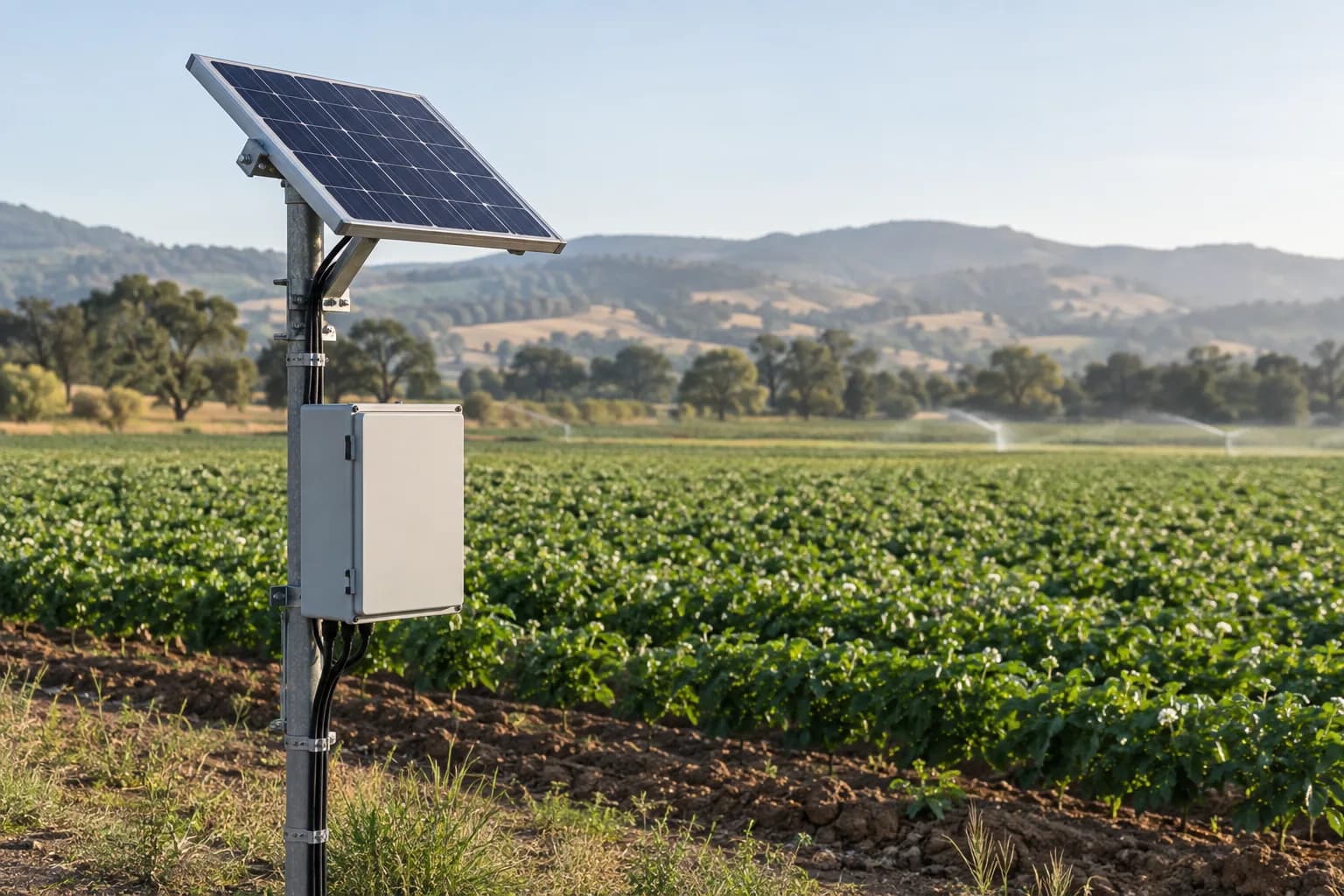
Keep the battery chemistry, usable capacity, charging controller and expected no-charge period together with the actual probe and logger versions. Use local seasonal solar conditions when charging is required. If batteries or mounting parts will be sourced locally, state their requirements and who checks compatibility. Send the measurement interval, upload interval, selected sensors and available power so the equipment and power package can be reviewed together.
| Operating choice | Effect to review |
|---|---|
| Upload every measurement | More frequent modem connection cycles |
| Batch uploads | Queue capacity and acceptable data delay |
| Sensor always powered | Continuous load may dominate sleep savings |
| Poor cellular service | Longer connection time and repeated attempts |
| Solar charging | Seasonal generation, battery limits and recovery time |
Common questions
Should sampling and uploading use the same interval?
They can, but they do not have to. Choose sampling for the measurement need and uploading for the permitted delay, available storage and power budget.
Can we reuse a battery estimate after changing the sensor?
Recalculate it. Warm-up, continuous load, supply voltage and cleaning or maintenance functions can change the station’s energy requirement.