Skip to content
SunGeneAgricultural IoT
← Agricultural solutions

Greenhouses & controlled growing environments

Greenhouse Monitoring: PAR, Root-Zone & Controller Data

Compare crop-light and root-zone sensors, then connect readings from growing zones and existing serial equipment to your monitoring system.

Discuss Your Project
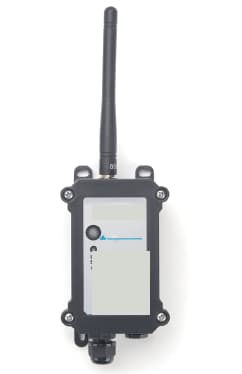
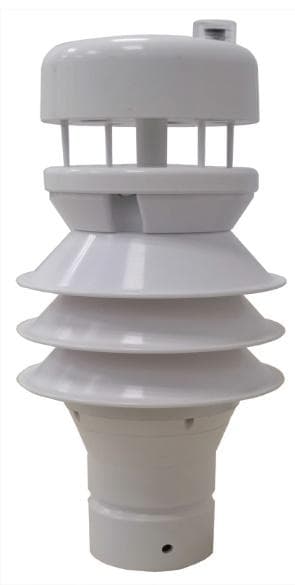
SG-THS-154: Atmospheric Temperature, Humidity and Barometric Pressure Sensor
Pictured: SG-THS-154 — Atmospheric Temperature, Humidity and Barometric Pressure Sensor.

Choose equipment for each growing zone

A greenhouse can need light measurements, root-zone readings and data from an existing controller. Keep these measurements identified by zone so staff can compare them with irrigation and lighting records.

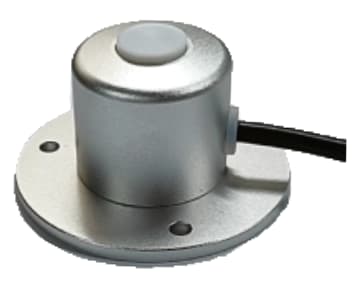
SG-SRD-113: PAR (Photosynthetically Active Radiation) Quantum Sensor
Pictured: SG-SRD-113 — PAR (Photosynthetically Active Radiation) Quantum Sensor.

Compare light at crop height

Read PAR at shaded and exposed positions or compare readings while supplemental lighting is on and off.

Equipment to select

PAR quantum sensors, level mounting and compatible logger inputs at the selected positions.

Keep the sensing surface clean and position it for the crop area being compared.
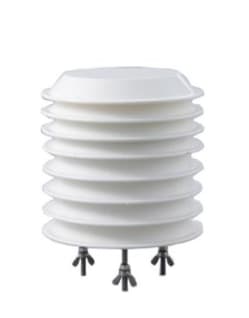
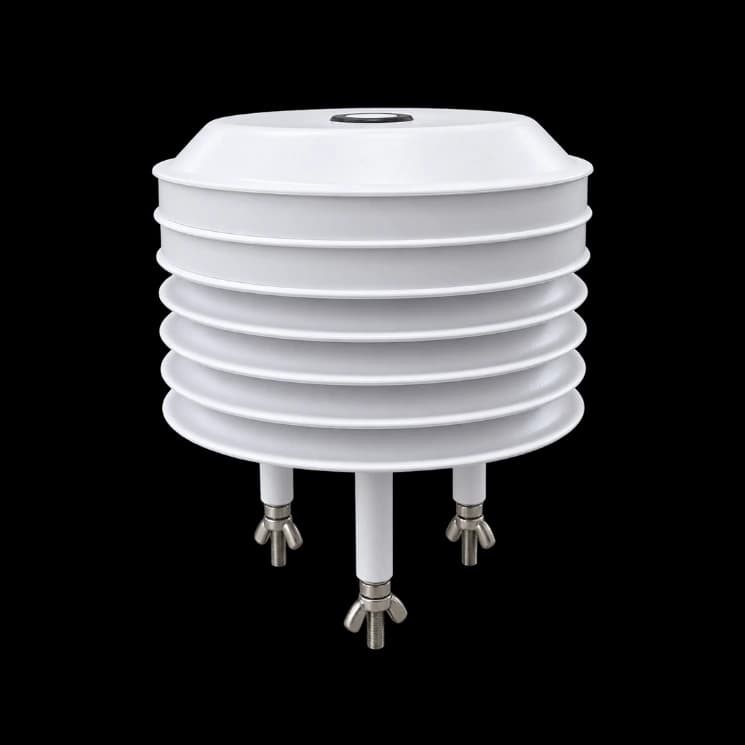
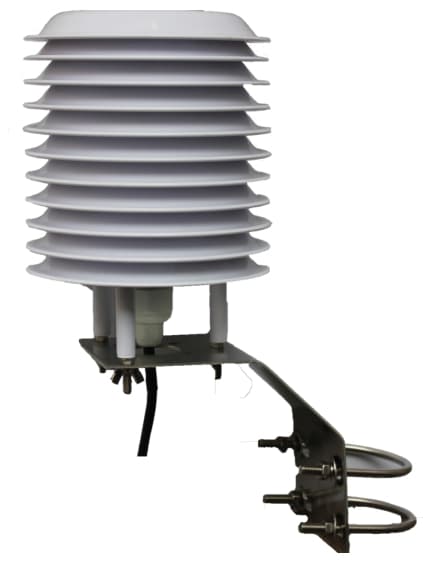
SG-WS-132: Atmospheric Temperature and Humidity Sensor
Pictured: SG-WS-132 — Atmospheric Temperature and Humidity Sensor.

Record air temperature and humidity

Compare air temperature and relative humidity between greenhouse growing zones.

Equipment to select

Battery-powered LoRaWAN temperature and humidity loggers, gateway coverage and network-server access.

Select the internal sensor or external probe, battery and LoRaWAN region. Listed operating conditions are -20 to +60 °C and 5-95% RH.

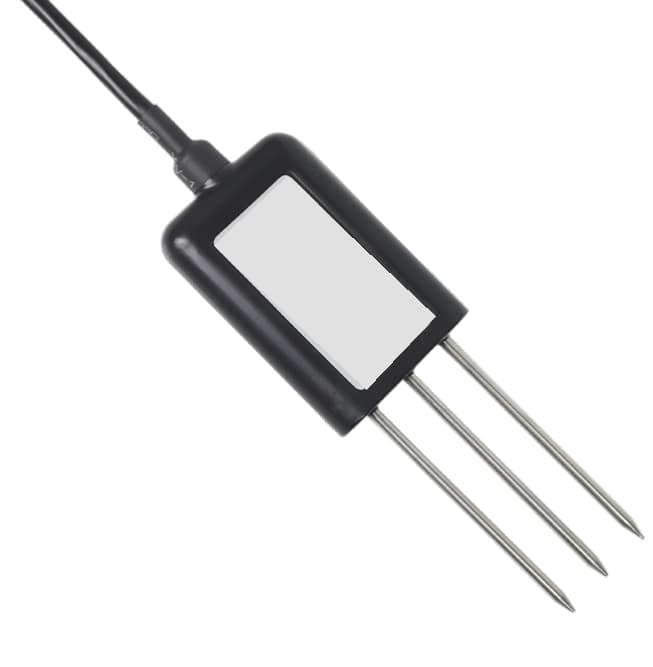
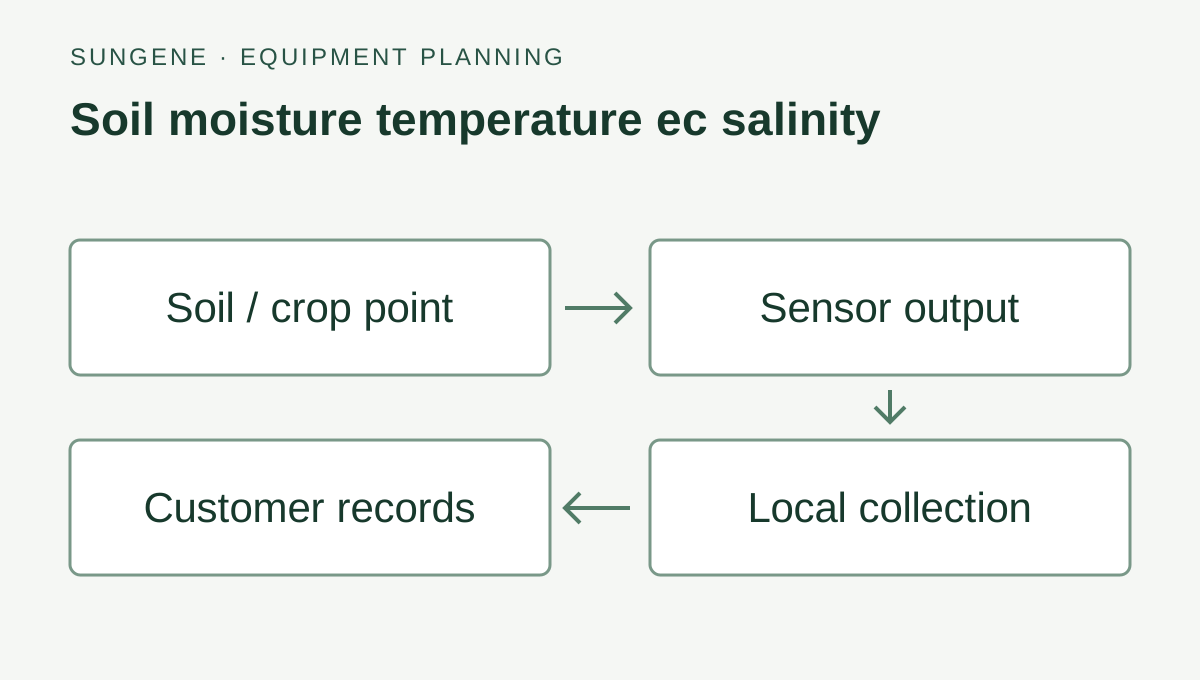
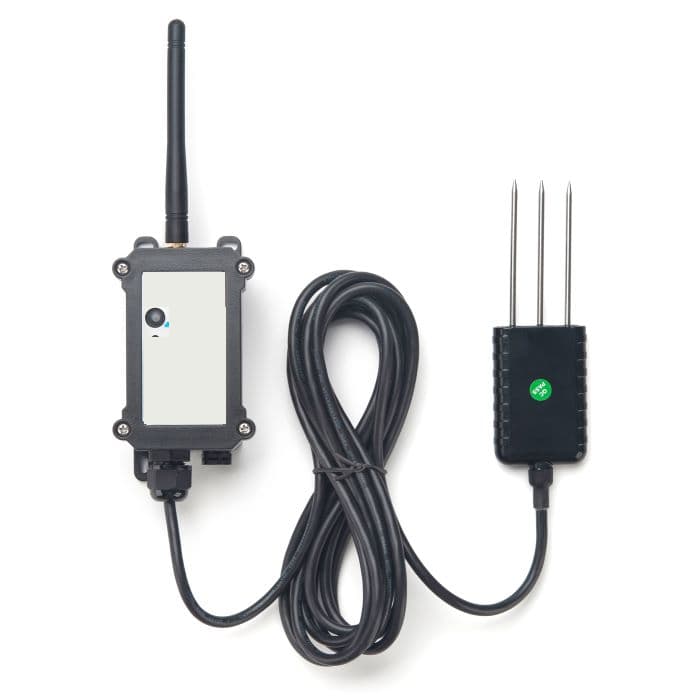
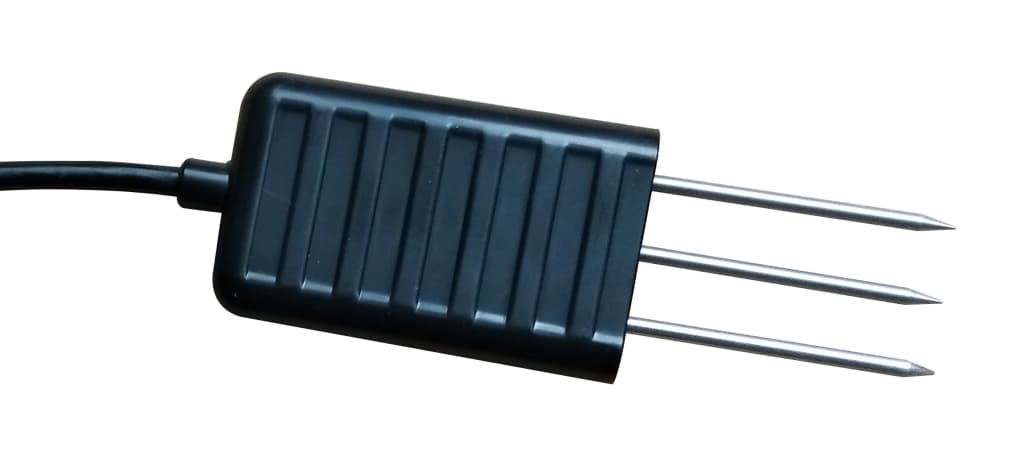
SG-SOIL-121: Soil Moisture, Temperature and EC Sensor
Pictured: SG-SOIL-121 — Soil Moisture, Temperature and EC Sensor.

Follow root-zone moisture and temperature

Compare readings between growing beds and irrigation zones.

Equipment to select

Soil moisture, temperature and EC probes with matching logger inputs and field cables.

Describe the soil or growing medium and installation depth. Select sensing points with the crop team.

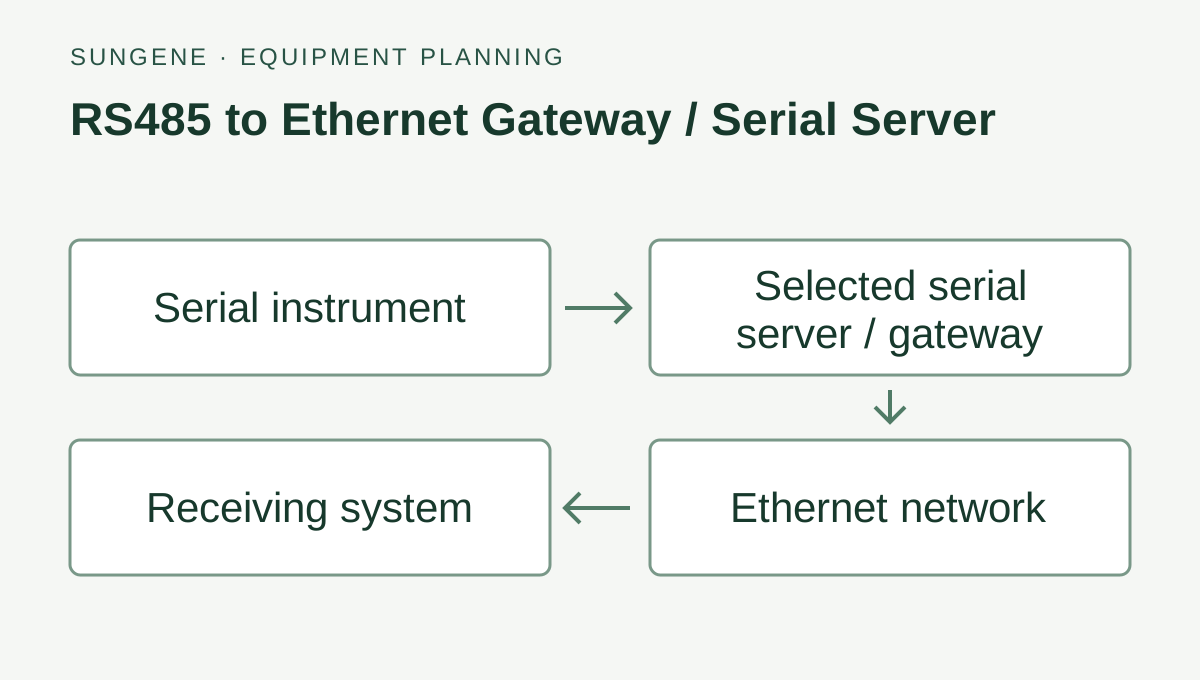
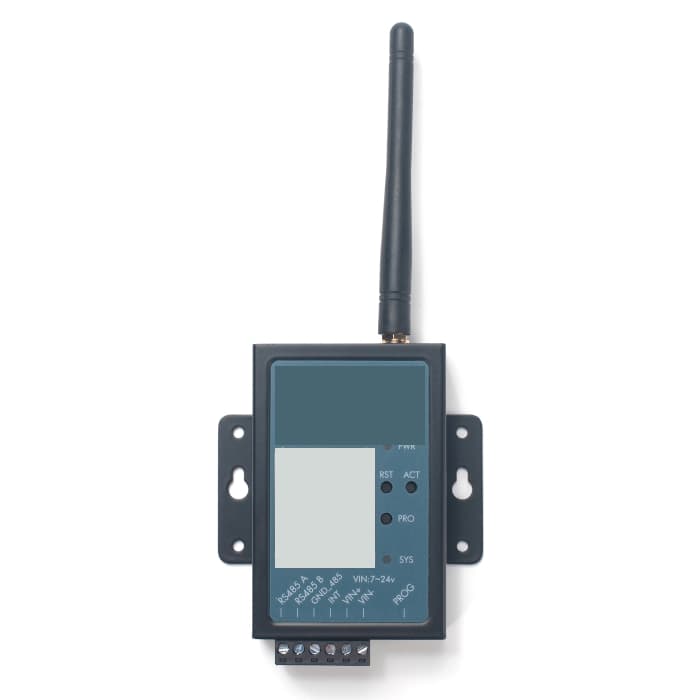
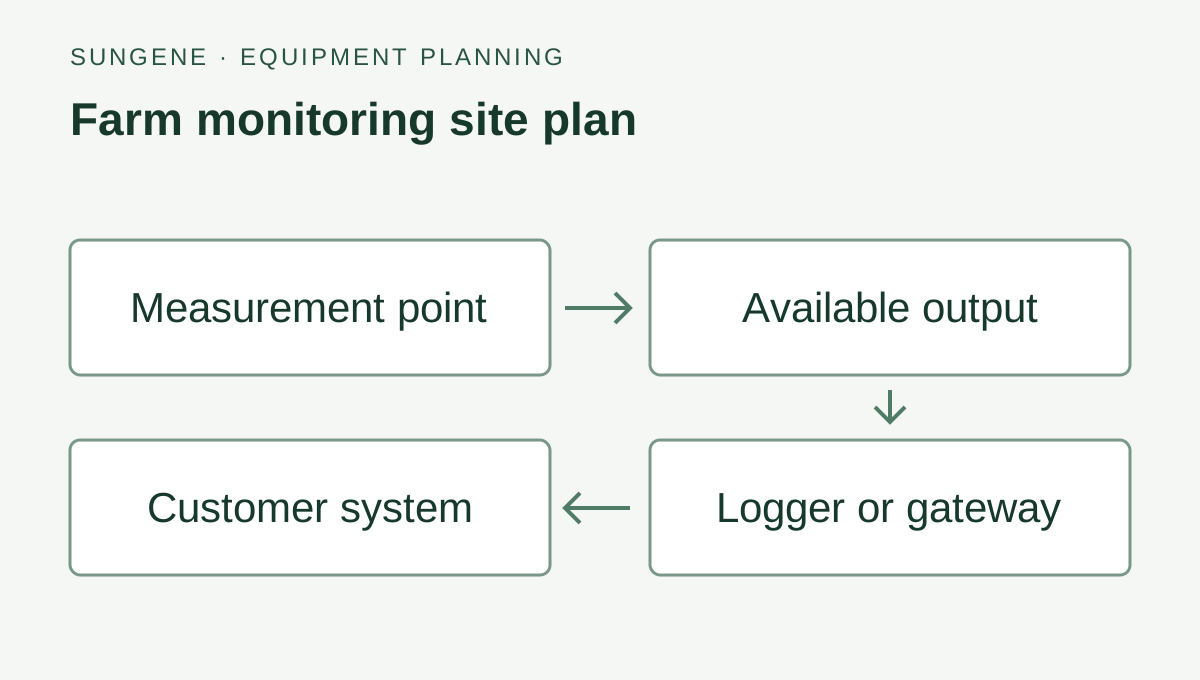
RS485 to Ethernet Gateway / Serial Server: Serial instrument → Selected serial server / gateway → Ethernet network → Receiving system.
RS485 to Ethernet Gateway / Serial Server — connection diagram.

Connect an existing serial instrument

Bring documented readings from installed meters or controllers into the receiving system.

Equipment to select

RS485-to-Ethernet protocol gateway with device-register and receiving-system configuration.

Send the instrument model, register map and receiving-system details. Keep control commands and local protection with the agreed controller scope.

Send a zone layout or an equipment photo

  • Country, greenhouse layout and the number of growing zones
  • Light, root-zone or existing-controller data you need
  • Existing device models, available inputs, power and receiving system

Monitoring collects and delivers readings. Climate-control settings and irrigation commands remain with the responsible site team.

Temperature and humidity together

Calculate greenhouse air VPD

Enter air temperature and relative humidity from the same position and time to calculate air vapour-pressure deficit (VPD).

Compare a pair of readings

Example inputs — replace with your readings.

Calculation range: 0–50 °C and 0–100% RH.

Calculated air VPD

1.11 kPa

Actual vapour pressure
2.06 kPa
Deficit to saturation
1.11 kPa

Saturation vapour pressure at 25 °C: 3.17 kPa.

Keep the zone and time with the readings

Record temperature, humidity, sensor position and time together. Calculate air VPD in the receiving system alongside the original readings.

Air VPD uses air temperature. Leaf-to-air VPD also needs leaf temperature. The grower sets crop targets and control settings.

Select the air-monitoring points

Send the country, growing zones, sensor positions and receiving system. Select the logger, probe, battery and regional LoRaWAN connection for the site.

Calculation method and reference

For a paired air reading, saturation vapour pressure is eₛ = 0.6108 × exp(17.27T / (T + 237.3)) kPa. Actual vapour pressure is eₐ = eₛ × RH / 100. Air VPD = eₛ − eₐ. T is in °C and RH in percent.

Use matched readings for each time point. Daily or longer-period calculations require the corresponding temperature and humidity records.

FAO-56, Chapter 3: temperature, humidity and vapour pressure →

Root-zone, light and weather measurements

RS485 equipment for farms and greenhouses

Compare soil moisture and pH, crop light, weather instruments and greenhouse relay panels. Open a family to see its measurement ranges, configuration choices and connection requirements.

The field requirement

Measurements and equipment on site

Compare conditions across growing zones, understand equipment status and make data available to the people managing the crop. Monitoring, agronomic interpretation and automated control each need a defined scope.

Who handles each part?

SunGene handles equipment sourcing, farm system architecture and the agreed software or integration work. On-site construction and installation are carried out by local teams; we can help you find and coordinate a suitable partner.

Already have equipment, but data is missing?

We can assess existing systems, including equipment supplied by another company. Describe what is failing and what still works. We confirm feasibility, access requirements and any charges before further work; local work is carried out by a local team.

System architecture & engineering details
  1. 01Field sensingSoil, weather, water & equipment
  2. 02Data acquisitionInputs, mapping & field power
  3. 03ConnectivityWired, wireless & recovery
  4. 04Platform integrationYour platform or a suitable service
  5. 05Alerts & decisionsAgreed views, exports & workflows
Equipment and functions are selected for each project. Control work also requires agreed command authority, local protection and outage behaviour.

Climate and root-zone sensors plus approved equipment-status interfaces → zone gateway or logger → local network → existing platform or suitable data service → agreed views, exports and alerts.

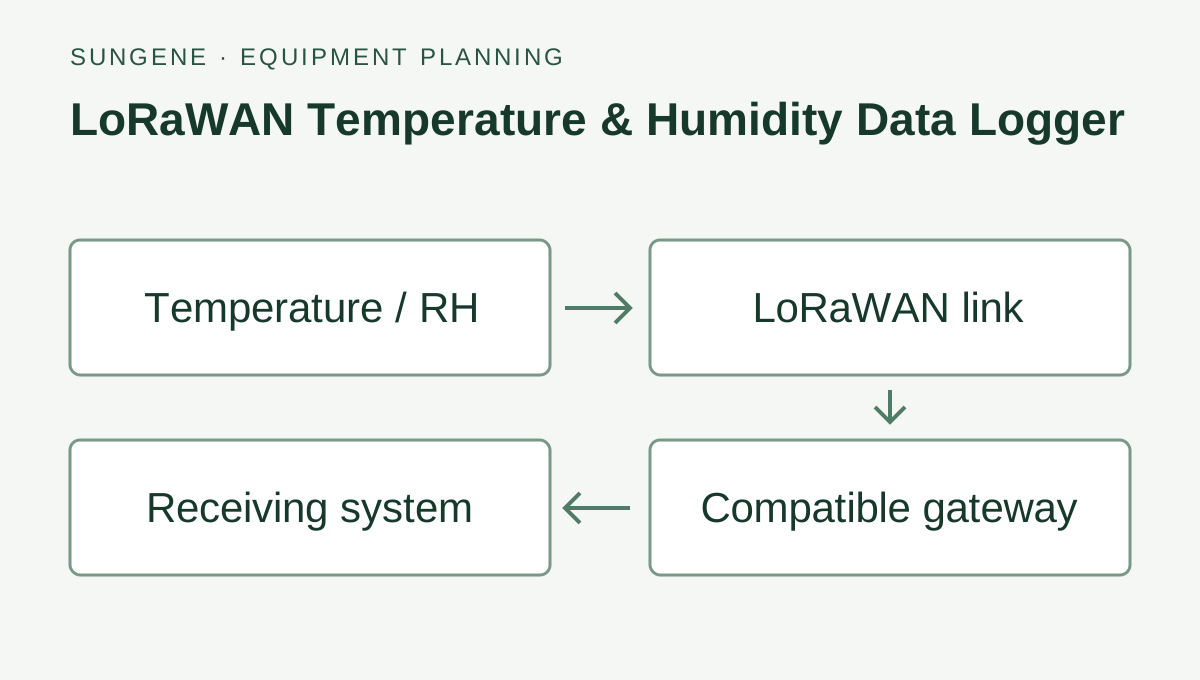
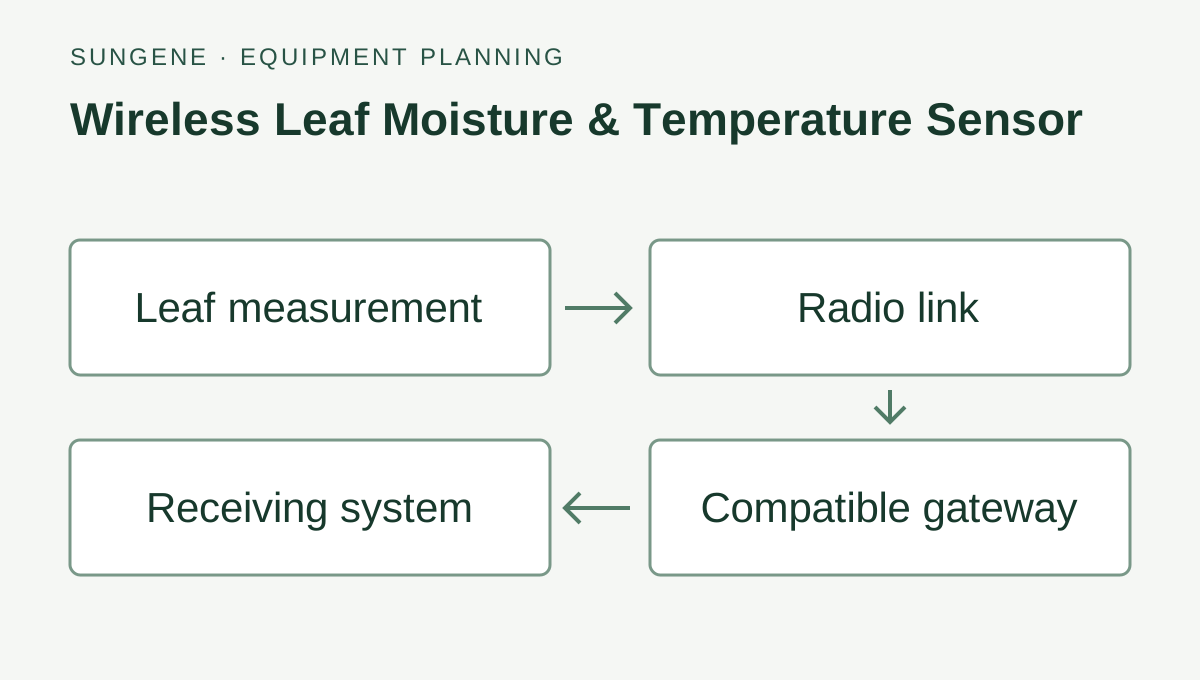
LoRaWAN Temperature & Humidity Data Logger: Temperature / RH → LoRaWAN link → Compatible gateway → Receiving system.

Greenhouse Sensors & Data Connections

Plan measurements across a greenhouse before choosing the controller and data connection. Start with the crop zones, existing instruments and the readings the growing team uses.

Site & interface review

Check power, interfaces and installation conditions

  • Growing zones, sensor placement and exposure to condensation
  • Existing climate-controller interfaces and access rights
  • Network coverage, data units and update intervals
  • Who can issue commands and what local protections remain active

Working with what is already there

Review existing equipment for reuse.

Existing controllers and sensors can remain part of the design where documented interfaces are available. Read-only monitoring and any command integration are agreed separately with the system owner.

Review equipment compatibility

Equipment selection questions

Can I add battery-powered temperature and humidity points?

Use a LoRaWAN temperature and humidity logger with gateway coverage and network-server access for the selected regional radio plan. Select the probe and battery version, then set the reporting interval and the fields sent to your receiving system.

Should I use PAR or lux for crop-light monitoring?

Use a PAR quantum sensor for photosynthetic photon-flux measurements at crop height. Lux describes illuminance for human vision and uses a different spectral weighting.

Can greenhouse monitoring be added to an existing controller?

Documented controller readings can be collected through a compatible interface. Provide the controller model, register map and receiving-system details; command access is defined separately from reading data.

What should each greenhouse record include?

Keep the zone, sensor identity, measurement, unit and reading time together. This lets staff compare light and root-zone readings with the relevant irrigation and lighting records.

See where the system fits

Our project role

Equipment, data connections and operating documents

01

Zone and equipment inventory

02

Interface and data-field mapping

03

Agreed platform views and alert routing

04

Pilot checks, configuration version and handover documents

Your proposal lists the selected equipment, software functions, checks, site responsibilities and support. Share your existing equipment and site conditions so we can define the configuration.

See our integration services

Useful before you begin

Related installation and selection guides

Related equipment families

Equipment for this system

Select the version for your controller, power and site.

Contact SunGene

Ask about equipment,
planning or a system fault.

Tell us your country and what you want to measure or fix. A site photo or equipment list helps us check the options.