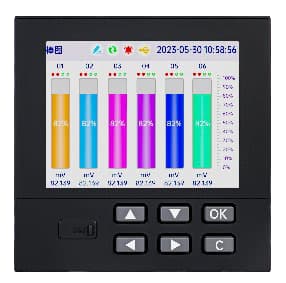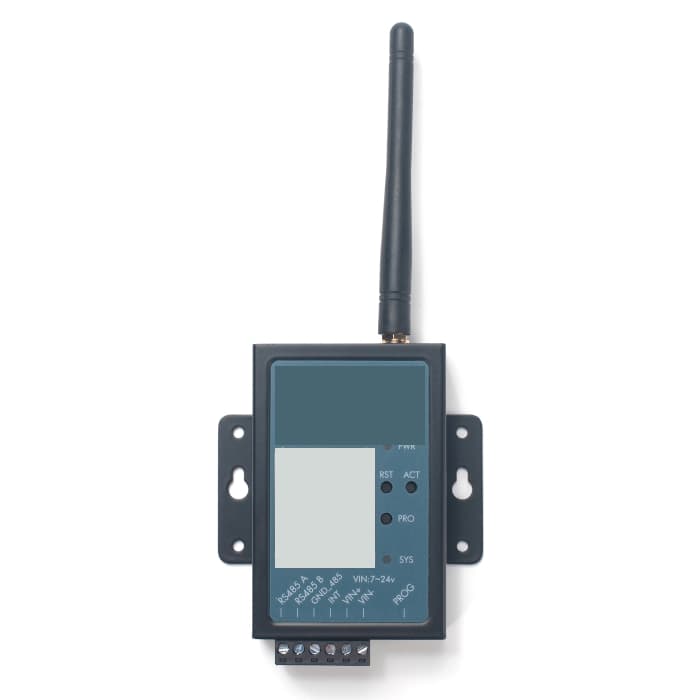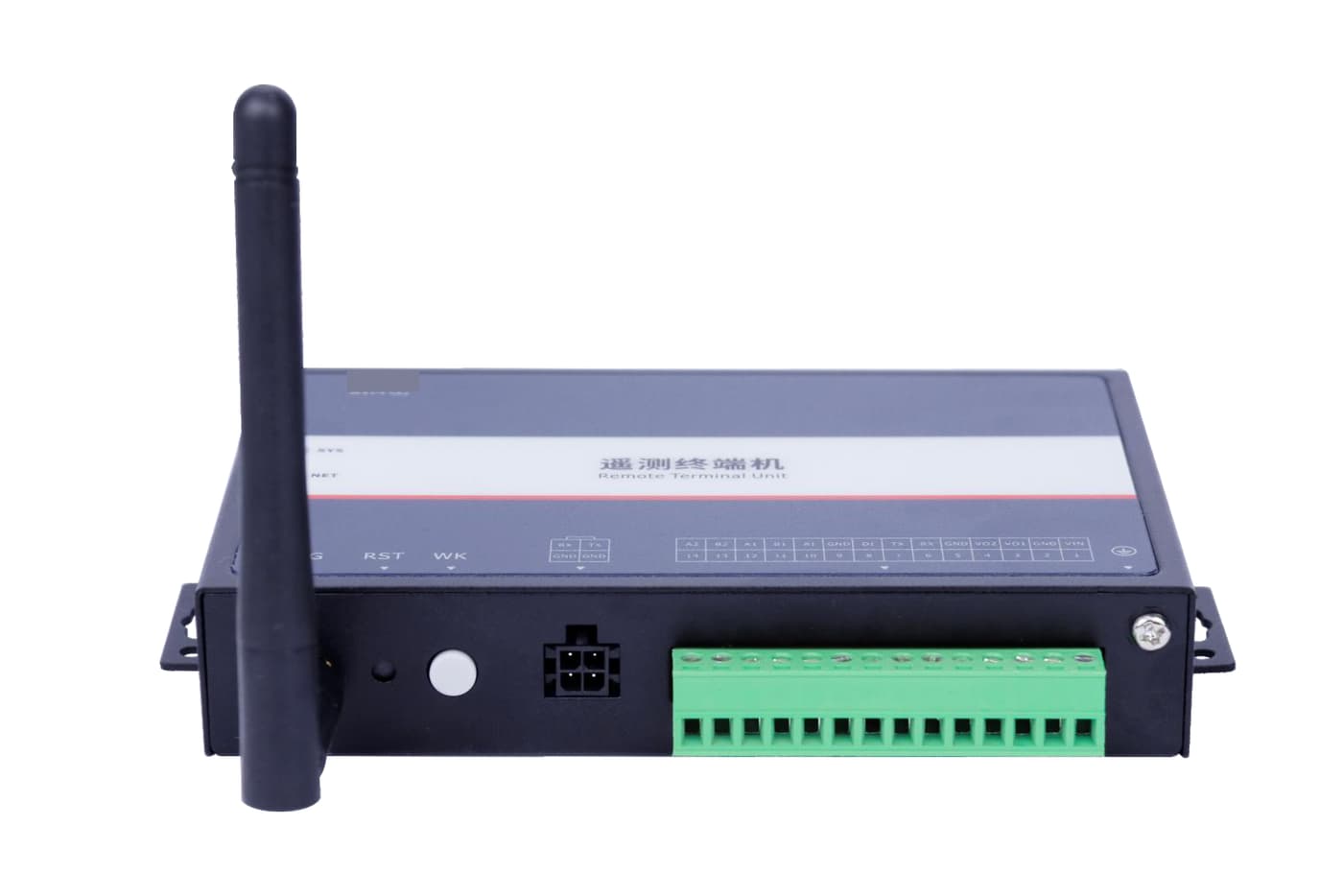
How can a farm monitor a pump without replacing its control panel?
First ask the panel owner and qualified local electrical team which run, fault or meter outputs are documented and available for read-only monitoring. Map those signals to a suitable acquisition device and data destination. Leave motor protection and local stop functions with the existing approved system unless a separate control project is agreed.
Explore farm equipment and energy monitoring- Existing panel
Documented run, fault and meter outputs
- Acquisition
Correct input type and read-only mapping
- Monitoring
Status, original time and missing-data indication
Separate status, measurement and command
A run contact, a fault contact and an energy meter answer different questions. A current reading may help assess load, but it does not identify every fault or prove water flow. A remote start or stop command changes operating responsibility and should not be inferred from a request to monitor status. Record the signal purpose before selecting inputs.
Review the interface with the panel team
Collect the panel drawing, controller and meter model, available terminals or documented communications, supply voltage, enclosure constraints and site access rules. The qualified local team decides how to isolate, protect and connect electrical circuits. SunGene can review the monitoring interface and data path against that approved information; a photograph alone is not permission to wire into a panel.
- Confirm whether each state is a dry contact, voltage signal or protocol value.
- Check the final device’s input rating and interface documentation.
- Agree whether polling is read-only and who can change controller settings.
- Name the owner of wiring, commissioning and ongoing panel maintenance.
Prove the reading before expanding
At a pilot site, compare the local indication with the remotely reported run and fault states, including a stopped pump, a real or safely simulated fault and loss of communication where the site procedure permits. Record event time, site identity and alert ownership. Agree the test with the panel owner and keep the results with the configuration record.
Keep a controller signal’s meaning with its name
A contact labeled “run” may indicate a command, contactor state or another panel condition. Ask the panel owner to identify it from the drawing and confirm its meaning during commissioning. Keep that definition in the point list and application. Where a meter provides several values, confirm the supported read-only registers and update rate instead of inferring them from the interface name.
Plan the day the communications equipment fails
The site should understand which readings disappear if the gateway loses power or its network link. Review any new monitoring connection with the qualified local team so the approved control arrangement remains understood. Then check stale status, restart and resumed reporting within the agreed test scope. Record who investigates a missing reading and who handles an actual pump fault.
| Signal | What it can describe |
|---|---|
| Run contact | The state defined by the panel drawing |
| Fault contact | The controller’s documented fault indication |
| Electrical current | Load at the measured circuit |
| Flow measurement | Water movement at the instrumented pipe |
Common questions
Does a current sensor replace a pump fault contact?
No. Load current and controller fault state are different information. The useful combination depends on the operating question and the documented panel interface.
Can monitoring be added without remote control?
Yes, when approved read-only signals and a suitable acquisition path are available. Remote commands require a separate authority and protection review.