Connect separate fields and facilities
Review coverage, equipment identity and the path into your chosen platform.
Read the guideCompare indoor CO₂, temperature and humidity monitoring with separately selected outdoor instruments. Match each farm space to the equipment’s environmental limits.
1. Purpose
Collect the air readings used by the farm team from equipment suited to each space.
2. Suitable sites
Suitable indoor growing or farm rooms, with separately selected instruments for exposed points.
3. What to send
Send the country, required readings and a site photo. Include condensation, dust, weather exposure, power and network conditions.
Which farm point needs connecting?
Send the country, required readings and a site photo. Include condensation, dust, weather exposure, power and network conditions.
Choose the readings used by the growing or site team, then review the actual installation conditions. Indoor monitors and outdoor instrument packages have different mounting, exposure and maintenance requirements.
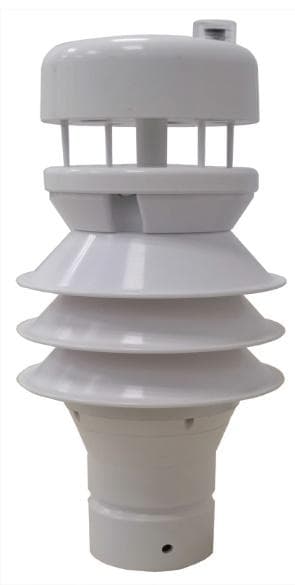
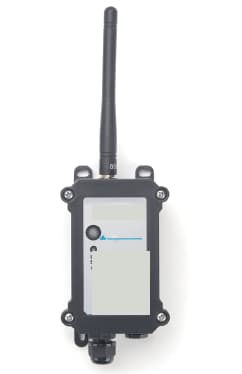
Equipment photographs: SG-AQM-104, SG-THS-154, SG-WS-163. Equipment and connection diagrams.
Farm task
Define the air reading and the farm decision before choosing an instrument. Review indoor conditions, condensation, dust and weather exposure for each point.
Review coverage, equipment identity and the path into your chosen platform.
Read the guide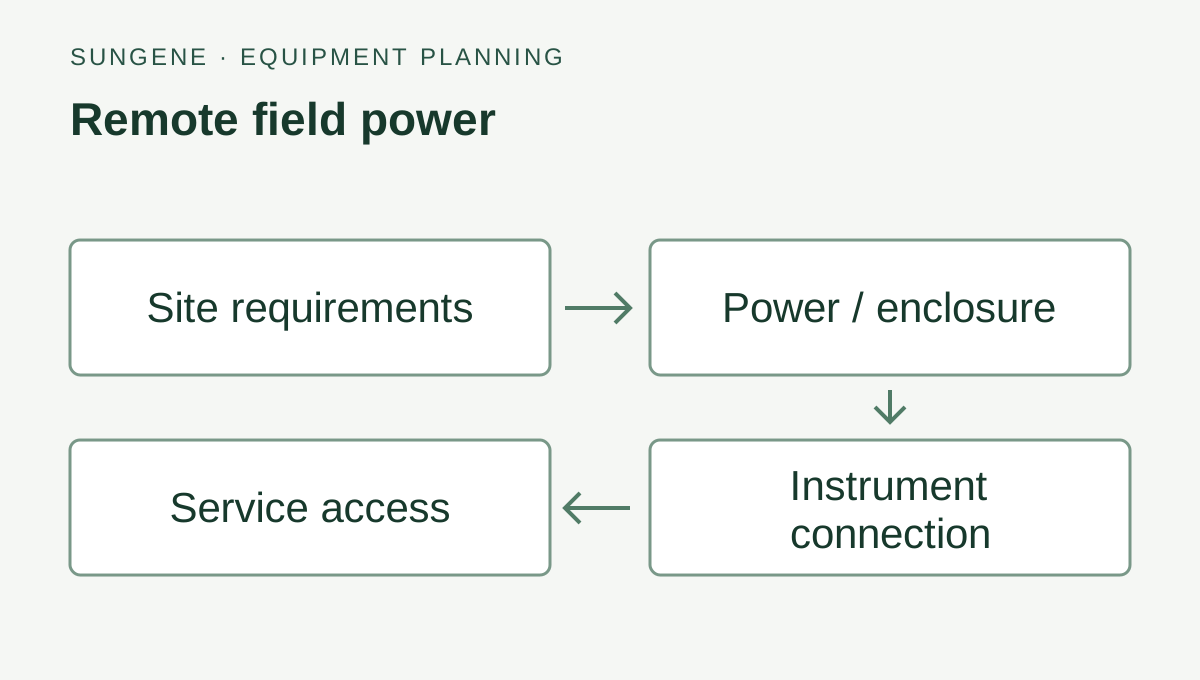
Size field power around the final equipment load, seasonal sunlight and visit interval.
Read the guideSelect supported CO₂, temperature, humidity or other modules for a space within the indoor monitor’s documented limits.
Choose the particulate, gas or weather instrument separately for the mounting location and measurement purpose.
Record the instrument position, ventilation, weather or nearby sources needed to interpret the readings.
Power, communication, last report, local storage, quality flags and maintenance records are included in the data plan.
Example equipment arrangement. Check compatibility and agree who handles software, PLC/SCADA programming and site installation.
Data destination
Customer platform or an agreed third-party service
Path 1
Best for: A protected indoor space within the selected monitor’s environmental limits.
Path 2
Best for: An exposed farm point with suitable instrument ratings, mounting and a maintenance plan.
Related equipment
The exact model, interface, enclosure and certificates are confirmed against the project before quotation.
Configurable indoor LoRaWAN monitor with a 4.2-inch e-paper display and selectable CO₂, PM, TVOC, temperature, humidity and room-context sensors.
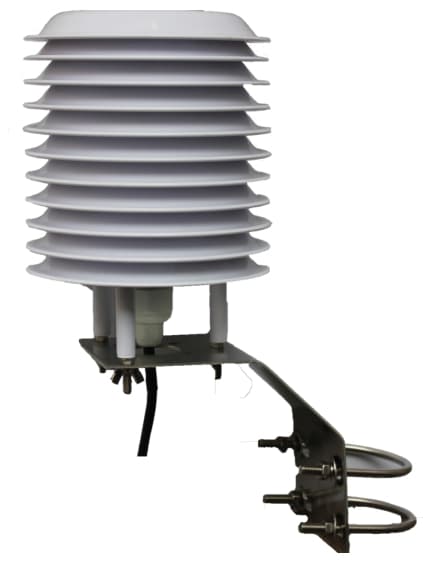
Slim IP65 probe for air temperature, relative humidity and optional barometric pressure. Select one parameter package, output, supply and cable configuration for the receiving logger or RTU.
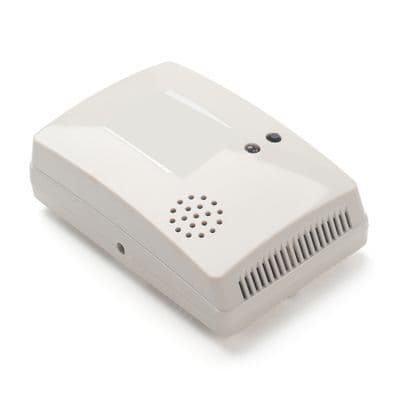
Wired RS485 Modbus RTU environmental sensor with configurable NH3, odour and supporting measurement channels for protected installations.
Configurable 5-, 6- or 9-channel weather instrument with mandatory ultrasonic wind measurement and a selected RS485 Modbus RTU, RS232 NMEA-0183 or SDI-12 interface.
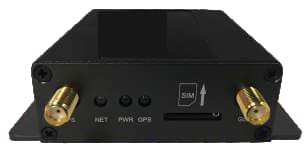
Cellular RTU gateway for irrigation pump stations, farm water telemetry and remote farm monitoring — collects RS485, analog and digital signals and uploads data over 4G LTE.
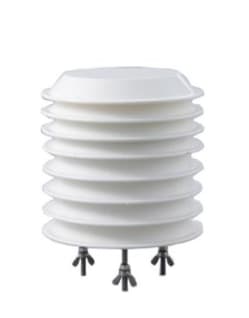
Product photograph. Pictured: SG-WS-132 — Atmospheric Temperature and Humidity Sensor.
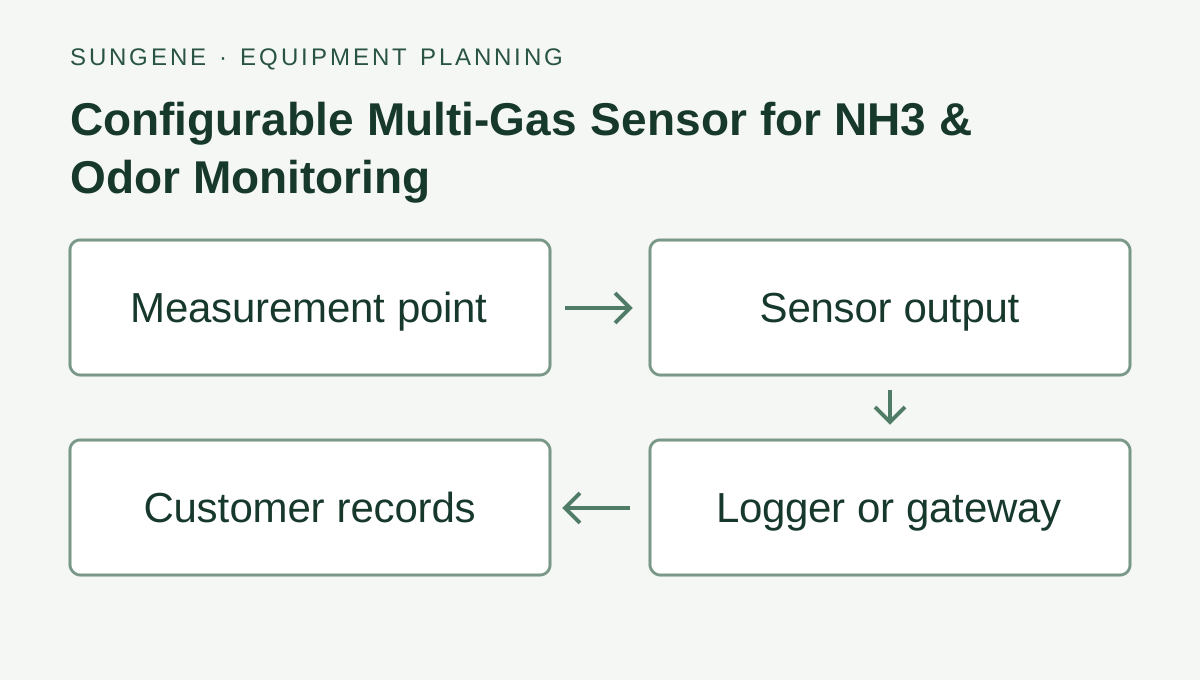
Locate the measurement points in the growing zones and list the existing sensor outputs. Include the collector, power and connection required by the greenhouse records.
View product specifications →
View product specifications →
No. It is configurable. The quotation lists the installed modules, LoRaWAN regional plan and payload fields.
No. Outdoor work needs a separate weather-rated instrument package selected for the site and measurement purpose.
Not by default. Suitability depends on the exact instrument, approvals, siting, calibration and local method.
Often yes, because wind, temperature and humidity help interpret air-sensor readings and site conditions.
Choose a representative location, the required readings, the selected instrument and a comparison method. Confirm the data path and maintenance access before adding more points.
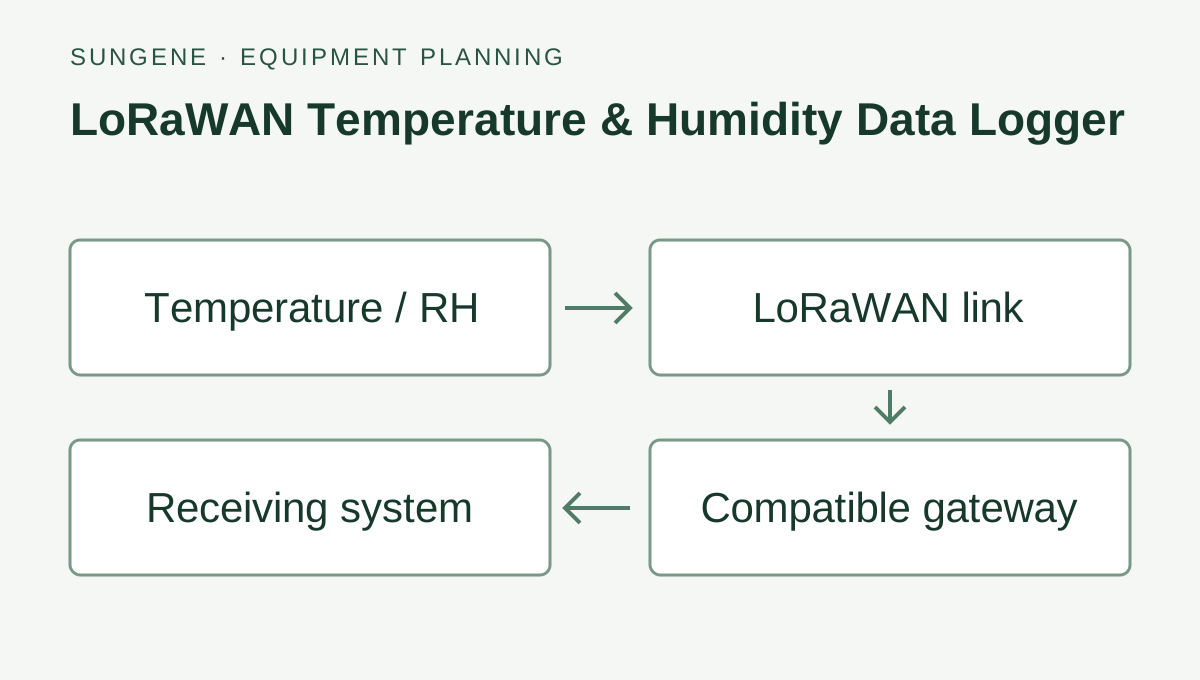
Plan measurements across a greenhouse before choosing the controller and data connection. Start with the crop zones, existing instruments and the readings the growing team uses.
Tell us what you want to measure and where. Send a model number or site photo if you have one.