Is an IP-rated enclosure enough for an outdoor LoRaWAN sensor?
It is a starting requirement, not the complete design. Check the assembled box with its cable glands, antenna entry, seals and mounting. Then review moisture, temperature and radio performance at the intended location. A rating on an empty enclosure does not establish the performance of the finished station.
Compare the enclosure and LoRaWAN kit options- Outside
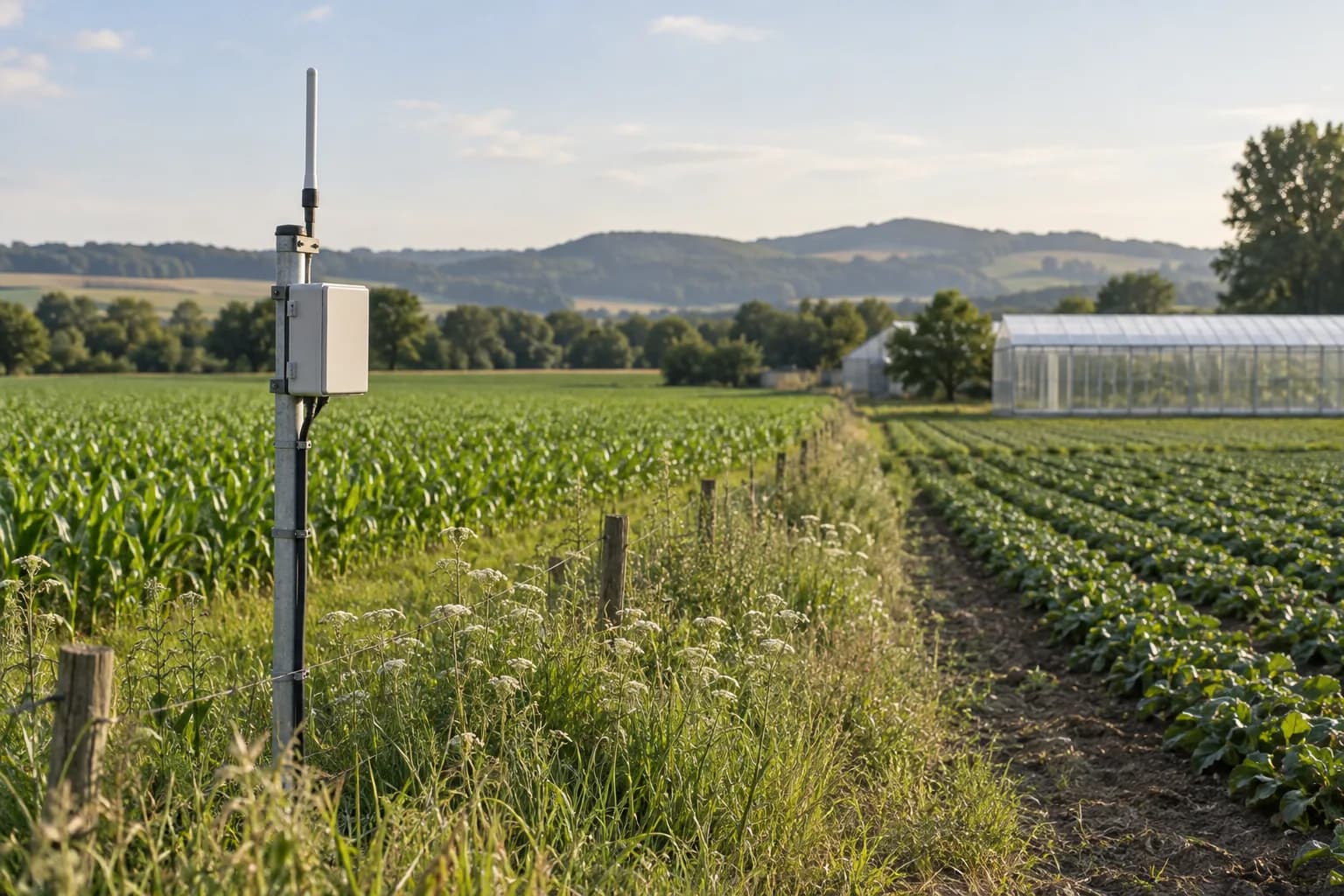
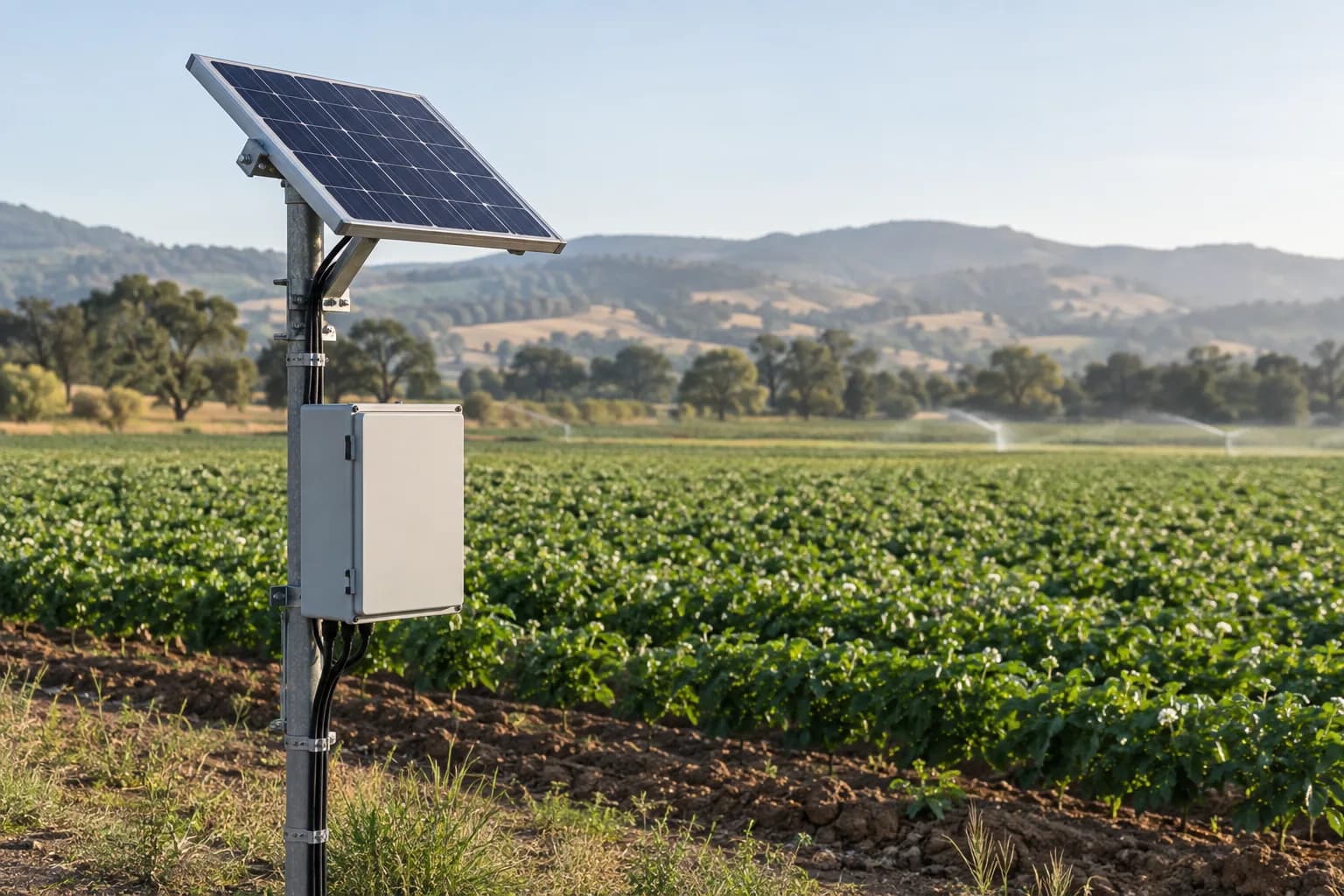
Rain, sun, mounting and cable route
- Boundary
Lid seal, glands and antenna entry
- Inside
Moisture, heat and service clearance
Start with the cables, not the catalogue photo
An empty box can look large enough until the terminal block, battery, cable bend and lid are all in place. Draw the entry points and the equipment footprint before ordering. Leave room to tighten a terminal and remove the battery without pulling on the sensor cable. Ask for the gland size against the actual cable outside diameter; a threaded hole size alone does not tell you whether the cable will seal.
- Account for unused openings and their specified plugs.
- Confirm whether the antenna stays inside or needs a documented external connection.
- Check that the mounting arrangement does not strain the lid or cable entries.
A dry box can still develop moisture
A warm enclosure cooling overnight can develop condensation when the internal air reaches its dew point. Repeated temperature changes also change internal pressure. A suitable protective vent can help manage pressure and moisture, but it is not a repair for a damaged seal or a substitute for selecting the complete assembly. Ask the enclosure supplier about vent placement, airflow and installation requirements for the intended environment. Do not improvise an open drain hole in a rated box.
Put the antenna where you will actually use it
A radio test with the lid open on a desk is a useful first check. It does not answer whether the installed node will communicate. The enclosure material, nearby metal, mounting height and antenna position change the radio path. Repeat the check with the final lid, cable routing and antenna arrangement, at the intended reporting interval. Record missed messages as well as received ones. One successful packet is too little evidence for a deployment decision.
Make the next visit part of the design
A field station may need a battery change, seal inspection or sensor service. Decide how the technician reaches it and what must be opened. Keep a dated record of the enclosure, glands, plugs and antenna arrangement so a later replacement does not quietly change the assembly. If a site is washed down, exposed to chemicals or liable to flood, state that explicitly; “outdoor” is not a sufficiently precise requirement.
What to send before asking for a recommendation
A photograph of the mounting area, the device dimensions and a cable list are a useful start. Add the supply arrangement, whether the antenna must be external, and how the site is serviced. SunGene can review the equipment configuration and coordinate the agreed integration scope. The local installation team confirms mounting, cable routing and site protection.
| Situation | Check before ordering |
|---|---|
| Existing cables enter the box | Cable diameter, gland compatibility and bend clearance |
| Internal moisture appears | Seals, assembly history, temperature changes and suitable venting |
| Radio works only with the lid open | Final antenna position, enclosure material and installed coverage |
| Battery needs regular replacement | Safe access and a repeatable resealing procedure |
Evidence & context
Editorial planning guidance. The drawings show design questions, not a certified assembly or a completed site. Gore’s enclosure guidance explains pressure equalization and condensation; the remaining checklist is a proposed review of the actual installation.
The basis above distinguishes editorial guidance from anonymized project records. Final equipment capabilities and delivery commitments require configuration-specific confirmation.
Common questions
Does IP67 mean there will be no condensation?
No. An ingress rating does not by itself establish how moisture and temperature behave inside the finished assembly. Review the actual enclosure and its operating conditions.
Can SunGene recommend only an enclosure?
Yes. Share the equipment dimensions, cable entries and environment. An enclosure-only request and a complete monitoring configuration can be scoped separately.