
SunGene
Industrial IoT
Product Family Selection Sheet
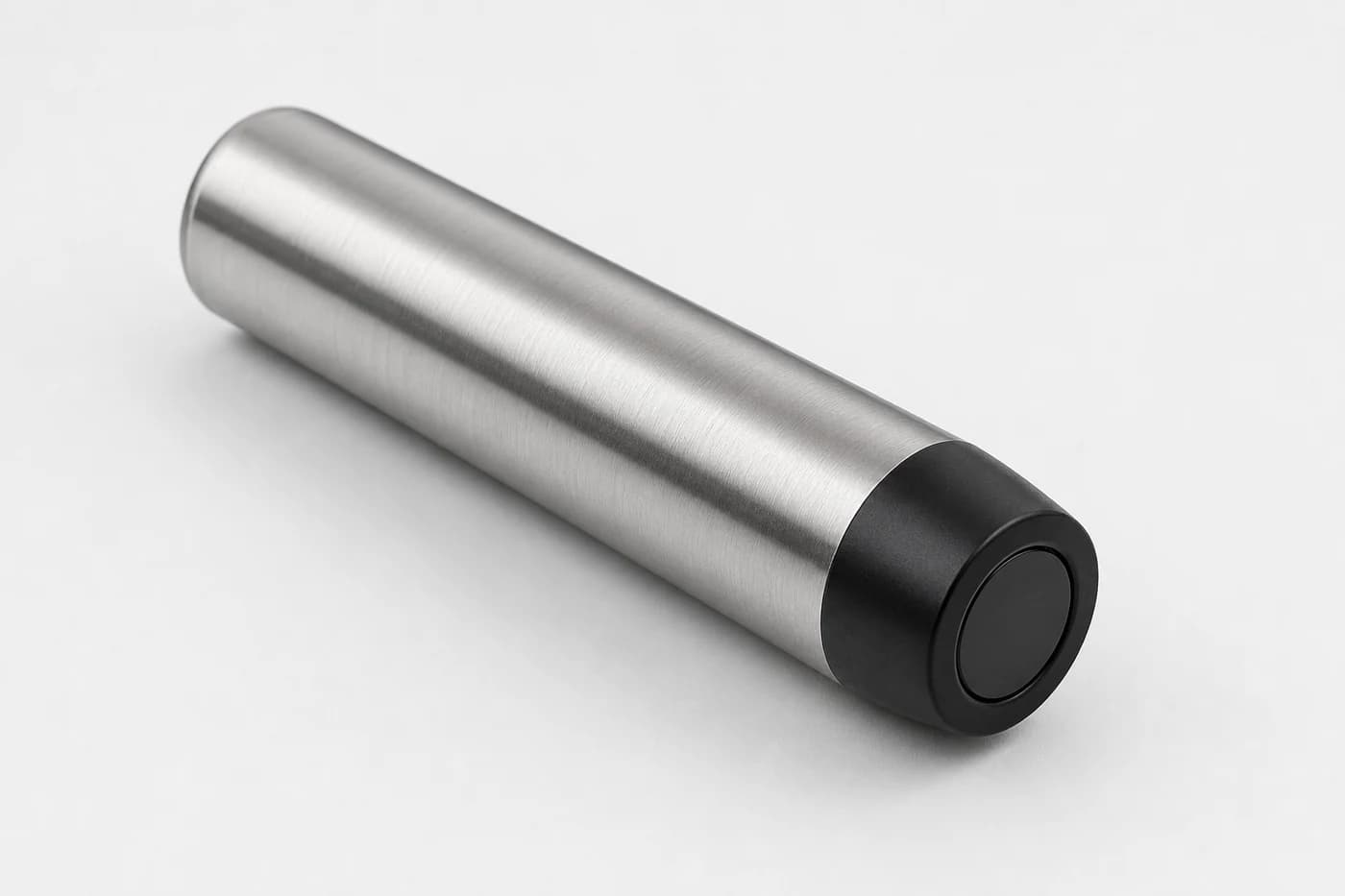
Online Turbidity Sensor for Water & Wastewater
Continuous 860 nm, 90-degree scattered-light turbidity probe with selectable 0–10 to 0–4000 NTU ranges and simultaneous RS485 Modbus RTU / 4-20 mA outputs.
Category: Water & Wastewater Instrumentation
Appearance, connectors and accessories are confirmed with the ordered configuration.
Specifications & version options
| Measurement principle | 90° scattered light using an 860 nm source |
|---|---|
| Selectable ranges | 0–10, 0–100, 0–1000 or 0–4000 NTU |
| Accuracy | Type A / B / C: ±1% FS; Type D: ±2% FS |
| Resolution | Type A / B / C: 0.01 NTU at ≤10 NTU, 0.1 NTU above; Type D: 0.1 NTU |
| Response time | 1 s |
| Outputs | 4–20 mA and RS485 Modbus RTU simultaneously |
| Supply | 7–28 VDC reviewed mutual limit |
| Power | <0.2 W normally; Type D brush start <1.5 W |
| Installation types | Immersion, pipe (Type C) or cleaning-brush (Type D) |
| Environment | IP68; up to 0.8 MPa; 0 to +60 °C, Type D -5 to +60 °C |
| Cable | 5 m reviewed default |
SG codes for enquiry
28 sourcing references from “Water-quality electrodes and probes”. Put an SG code in the RFQ so we can match the same catalog row.
SG-WQE-101SG-WQE-102SG-WQE-103SG-WQE-105SG-WQE-106SG-WQE-107SG-WQE-108SG-WQE-109SG-WQE-104SG-WQE-110SG-WQE-111SG-WQE-112SG-WQE-115SG-WQE-118SG-WQE-124SG-WQE-127SG-WQE-128SG-WQE-113SG-WQE-114SG-WQE-119SG-WQE-120SG-WQE-121SG-WQE-122SG-WQE-123SG-WQE-116SG-WQE-117SG-WQE-125SG-WQE-126
Match the turbidity range, body and cleaning method
The reviewed record contains four hardware types. Range alone is not enough to select the ordered probe.
- Selectable ranges are 0–10, 0–100, 0–1000 and 0–4000 NTU. Normal and upset turbidity should stay inside the selected range.
- Types A, B and C are specified at ±1% FS. Type D includes a cleaning brush and is specified at ±2% FS with a different power profile.
- Types A, B and C resolve 0.01 NTU at or below 10 NTU and 0.1 NTU above 10 NTU. Type D resolution is 0.1 NTU.
- The reviewed electrical configuration provides 4-20 mA and RS485 Modbus RTU at the same time, with a one-second response time.
- Type C is the pipe-installation option. Type D is the self-cleaning option. Wetted materials vary by type and are listed in the quotation rather than generalized on this page.
- The optical window still requires inspection. Colour, bubbles, deposits, flow direction, reflective pipe walls and nearby surfaces can affect installation and data quality.
Typical applications
- Low-range treatment-water turbidity trends using the selected 0–10 or 0–100 NTU range
- Wastewater and process-water monitoring using a higher range matched to solids loading
- Aquaculture or surface-water points with optical-window cleaning access
- Pipe-mounted or self-cleaning installations when the appropriate type is ordered
Inquiries: contact@sungeneiot.com · sungeneiot.com
These are typical reviewed options for this product family, not a single orderable SKU. Final model, connectors, certificates and availability are confirmed in the quotation.