
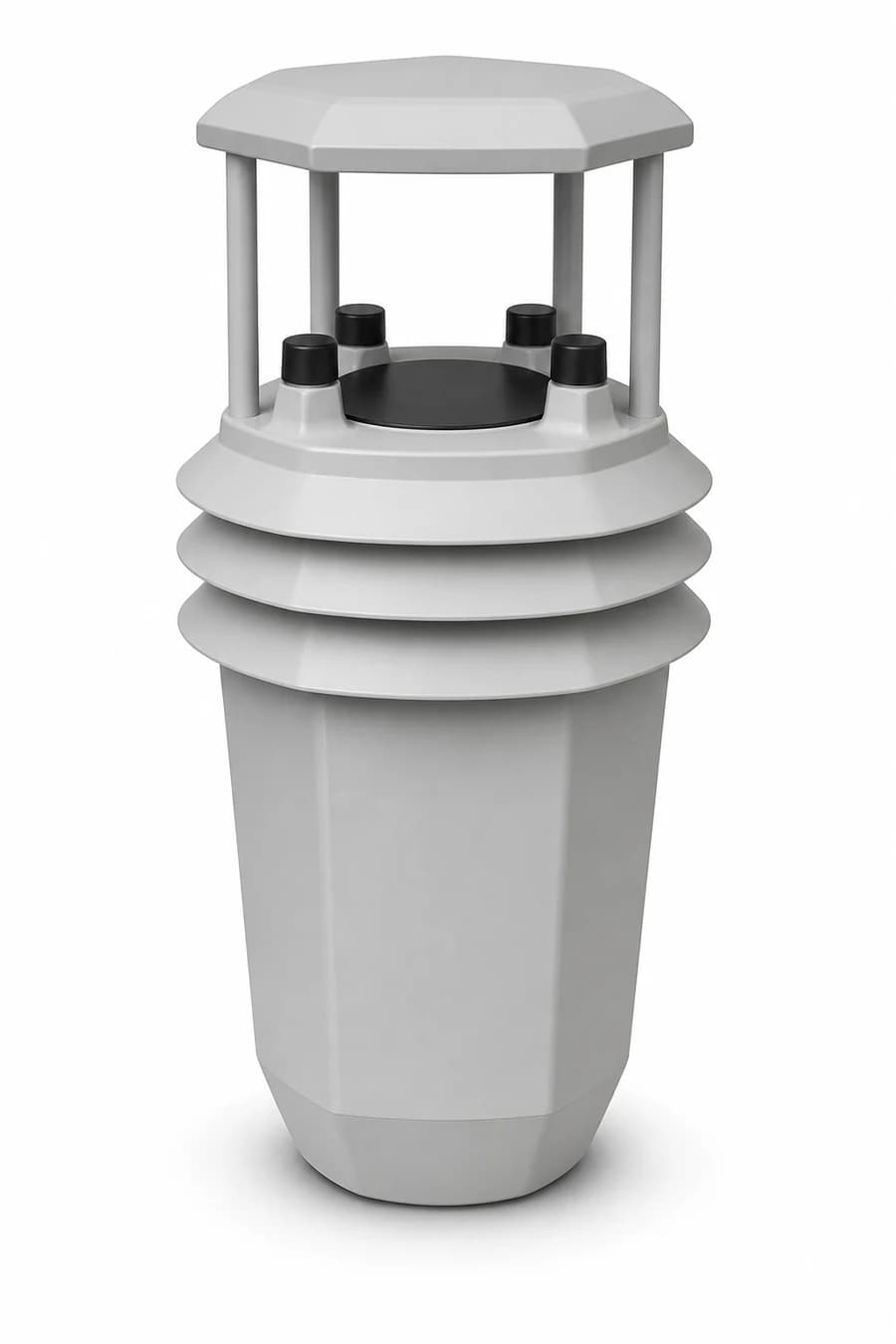
Solar-Powered Automatic Weather Station Kit
Off-grid automatic weather station kit with six-parameter sensing, RS485 Modbus, site-sized solar power and a project-selected LoRaWAN or 4G backhaul.
Category: Environmental & Agriculture Sensors
Appearance, connectors and accessories are confirmed with the ordered configuration.
Specifications & version options
| Core parameters | Wind speed, wind direction, air temperature, relative humidity, atmospheric pressure and rainfall |
|---|---|
| Wind | 0-70 m/s, ±3% FS; direction 0-359°, ±3° |
| Temperature / humidity | -40 to +80 °C, ±0.5 °C; 0-100% RH, ±3% RH |
| Pressure / rainfall | 300-1100 hPa, ±1 hPa; 0-200 mm/h, 0.1 mm resolution, ±5% |
| Instrument output | RS485 Modbus RTU selected for this kit; RS232 or SDI-12 as separate ordered options |
| Instrument power | 12-24 VDC, <1.7 W |
| Instrument protection | IP65; -20 to +70 °C operating range; ASA housing |
| Solar controller | 10 A; automatic 12/24 V recognition; IP67; panel and battery sized per site |
| Telemetry options | LoRaWAN RS485 node or separately selected 4G RTU; one path per project |
SG codes for enquiry
18 sourcing references from “All-in-one weather stations”. Put an SG code in the RFQ so we can match the same catalog row.
SG-WS-110SG-WS-162SG-WS-163SG-WS-164SG-WS-161SG-WS-166SG-WS-120SG-WS-167SG-WS-111SG-WS-123SG-WS-122SG-WS-121SG-WS-118SG-WS-116SG-WS-117SG-WS-108SG-WS-109SG-WS-165
Define the whole station before sizing the solar package
Source documents define the instrument, solar-controller and LoRaWAN-node boundaries below. They do not turn every option into one fixed kit.
- The core instrument measures wind speed, wind direction, air temperature, relative humidity, atmospheric pressure and rainfall.
- This kit uses the ordered RS485 Modbus RTU output. RS232 and SDI-12 are separate instrument-output choices, not simultaneous default interfaces.
- The <1.7 W figure applies to the weather instrument only. The logger, radio, heaters and enclosure accessories must be included in the station load.
- The controller is rated 10 A, recognises 12 or 24 V systems automatically and is IP67. Panel wattage and battery capacity are sized from site sun hours, load and autonomy.
- The battery is normally sourced locally for transport and service reasons and is not included by default.
- LoRaWAN and 4G are alternative backhaul paths. The LoRaWAN node needs the correct regional plan and an outdoor enclosure; a 4G RTU is reviewed separately.
- Optional radiation, illumination, air-quality or noise channels are quoted only when the matching sensor record and complete power budget are selected.
Typical applications
- Agricultural and irrigation weather monitoring at sites without reliable mains power
- Solar-farm and remote-infrastructure weather data collection
- Reservoir, watershed and field stations that need local RS485 data plus wireless backhaul
- LoRaWAN or 4G telemetry projects where the customer owns the destination platform
Inquiries: contact@sungeneiot.com · sungeneiot.com
These are typical reviewed options for this product family, not a single orderable SKU. Final model, connectors, certificates and availability are confirmed in the quotation.